Strategizing from 7 cities across the globe

Targeting the Roots and the Returns: Understanding Breast Cancer Relapse Mechanisms to Enhance Dual-Action Therapies
Julia Hamadeh
Edited by: Perla AbdelNour


Breast cancer incidence has increased significantly in Lebanon, particularly among young women. According to the American University of Beirut Medical Center (AUBMC), 50% of women diagnosed with breast cancer in Lebanon are under the age of 50. While survival rates are improving, the leading cause of mortality among affected patients is the elevated risk of relapsing breast cancer, even after full tumor resections and therapies.
While the risk of recurrence can partially be predicted by factors such as the tumor stage, extent of spread, and genetic predisposition of the cancer, the biological mechanisms behind relapse are much more complex. At the cellular level, several factors contribute to treatment challenges: cellular dormancy, which includes cells that are practically invisible to therapies and can branch out into different subtypes; minimal residual disease, meaning small populations of cancer cells that may remain after treatment; the possible role of the immune system in both protecting and promoting cancer cell proliferation; and epigenetic plasticity, which can lead to drug resistance against targeted therapies.
Despite the recent recognition of these possible causes for relapse in fields of research for medical professionals, most breast cancer therapies remain designed to eliminate actively multiplying cancer cells. This gap in treatment strategy highlights the need of understanding the various mechanisms of recurrence, that will lead to the design of more effective cancer drugs, which are able to target both cancer destruction and prevention of future occurrences simultaneously. These dual-action therapies are being proposed and thoroughly tested through various trials mostly in the US and European countries, such as the CLEVER trial in the US that is working on new dual action chemotherapies.
The purpose of this research paper is to examine the biological mechanisms underlying breast cancer relapses and to assess emerging dual action therapies that aim to improve long term patient outcomes by working on tumor elimination and recurrence prevention. I will first present the concept of minimal residual disease (MRD), then I will focus on tumor dormancy and reactivation with a special focus on the immune system’s effect on tumor proliferation. I will also be examining the microenvironmental protection of residual cancer cells and epigenetic plasticity’s role in therapy resistance. I will finally examine the emerging dual action therapeutic strategies that come as a promising treatment compared to single target therapies.
Minimal Residual Disease (MRD)
Minimal Residual Disease (MRD) refers to lingering cancer cells post cancer therapy, such as chemotherapy. These cancer cells linger in a way that is not detected by scans that are designed to detect tumors, such as mammographies, CT or PET scans, or MRIs. These cancer cells manage to escape treatment simply because they are not sensitive to the drugs administered and have formed a sort of resistance to them. Alternatively in the case of full tumor excision, some cells could have been left at margins or have already spread their DNA to neighboring cells. Consequently, patients may seem in complete remission although residual malignant cells have persisted (Boldt, 2020).
They may also be completely hidden, in bone marrow or even distant organs, which prevents their detection. Therefore, MRD is widely recognized as the principal driver for breast cancer relapses. Among the key mechanisms allowing for MRD to persist is cellular dormancy, a process in which cancer cells enter a reversible non-proliferative state that allows them to evade elimination through drugs (Boldt, 2020).
Autophagy is a cellular process in which cells degrade and recycle their own components, such as damaged proteins and organelles, through the formation of autophagosomes inside their cells. Autophagosomes fuse with lysosomes that carry toxins and waste that the cell would normally release to its environment. This process provides energy and metabolites, removes harmful cellular debris, and helps cells survive stressful conditions. In the context of minimal residual disease (MRD) in breast cancer, dormant residual tumor cells (DTCs) rely on autophagy to persist after therapy. By activating autophagy, dormant MRD cells can survive nutrient deprivation, low oxygen, and therapy-induced stress, effectively evading elimination. This survival advantage contributes directly to relapses, making autophagy a promising therapeutic target to reduce recurrence.
Dormancy and The Immune System
Cellular dormancy is when a cell, especially a cancer cell, temporarily stops dividing and enters a “quiescence state” but remains alive and can start proliferating later on. This mechanism allows the cell to survive harsh conditions such as chemotherapy treatment. The cell can later choose to divide in suitable environmental states; most notably post therapies.
A cancer cell enters dormancy by arresting in its cell cycle before the phase G1, which is the phase that begins to prepare the cell for division. This arrest places the cell in the quiescent state that is referred to as G0. The cell can later activate the cell cycle through multiple signaling pathways, notably growth factor mediated pathways through Receptor Tyrosine Kinases (RTKs).
RTK pathways activate a signaling cascade that results with the activation of a transcription factor, E2F, that allows the production of proteins related to the progression of the cell cycle into the G1 phase (Min and Lee, 2023).
While it is very important to mention cellular dormancy since it provides cancer cells with a biological advantage, there is also another biological limitation that serves as an advantage to tumors. This is known as angiogenic dormancy which concerns small tumors, while cellular dormancy concerns the cellular level.
Angiogenic dormancy is an important stage in cancer where cancer cells are present, but the tumor does not grow enough to be detected clinically. When a tumor mass exists but its growth is matched with a certain rate of cell death, it leads to a stability in tumor size.
This is due to the stage where a tumor has not yet developed new blood vessels but is dividing. However, the blood does not provide the amount of oxygen and nutrients needed for all tumor cells. This is when cancer cells far away from the blood vessels start dying. This keeps tumors at a microscopic size, preventing them from being detected by traditional scans until it overcomes the angiogenic state.
The micro tumor enters a state of hypoxia when oxygen levels are low. This hypoxia activates a transcription factor, HIF-1 (Hypoxia Induced Factor 1), (Min and Lee, 2023). This factor activates genes that promote the production of various growth factors concerned in blood vessels development. These growth factors stimulate surrounding epithelial cells in the lining of blood vessels, for them to vascularize the entirety of the tumor. This is where the tumor starts growing and has reached a clinically detectable stage.
Finally, tumor dormancy can also be due to our own body’s defense mechanism: the immune system. Immune-mediated dormancy refers to the state in which tumor cells are present in the body but do not grow into detectable tumors because the immune system keeps them in check. The tumor size remains stable due to a balance between cell proliferation and immune-mediated cell death.
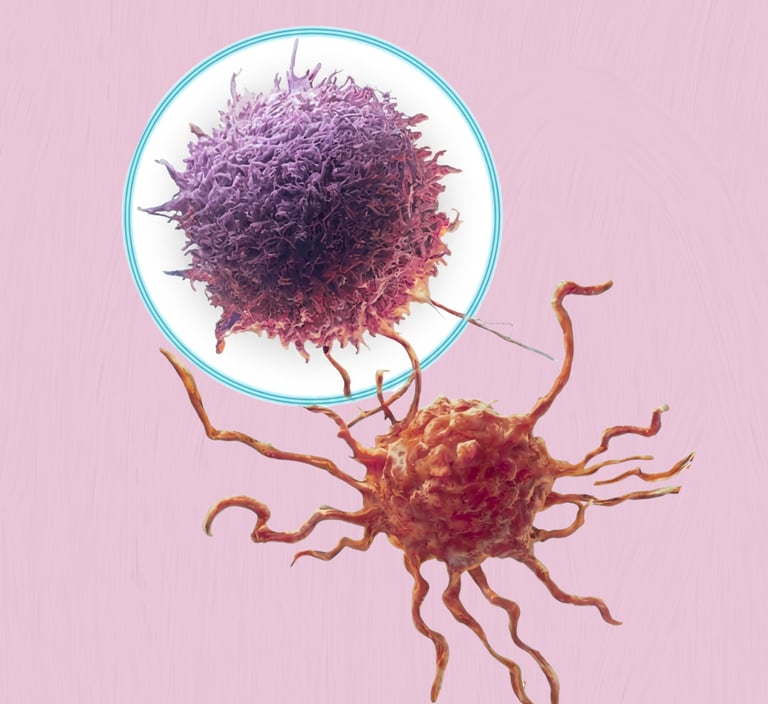
Immune cells such as CD8 T cells or NK cells recognize and eliminate tumor cells usually through the antigens present on cancer cells that are easily recognizable by our immune system (Min and Lee, 2023). This prevents the tumor from growing massively, which creates a clinically undetectable tumor. These immune mediated dormancies can be responsible for late relapse or even metastasis at a scale that is not observed by physicians.
Later, tumor cells can escape from the immune system by decreasing the expression of recognizable antigens on their surface, making them invisible to T cells. They could also secrete immunosuppressive factors to weaken the immune system, or even activate immunosuppressive cells like T regulatory cells, that regulate our immune system’s response. If cancer cells manage to activate them when they should not interfere with the immune system’s high activity, this can lead to unregulated tumor proliferation that is resistant to immune detection.
Nevertheless, for relapse to occur at an alarming rate, cancerous cells would need to awaken. Their reactivation is dependent on signals from the tumor's microenvironment (TME), — which includes fibroblasts, the extra-cellular matrix, and growth factors that provide the tumor with the necessary biochemical pathways to move into the awakening and proliferation phase.
Tumor Microenvironment Role in Relapse: The Extracellular Matrix
The tumor microenvironment is the dynamic cellular and structural surrounding of the tumor mass. It includes mostly the extra-cellular matrix, which is responsible for the cohesion of cells and the structural stability of any tissue, and fibroblasts, which are cells that produce the extra-cellular matrix and play a role in tissue growth and expansion.
In normal situations, the extra-cellular matrix (ECM) of any tissue is key to maintaining the structural integrity of cells and preserving cellular connections in tissues, which is very important for cellular communication and achieving different organ functions.
An experiment conducted in-vitro by the University of Massachusetts Amherst led by Dr. Hall, Dr. Schwartz, and Dr. Barney consisted of examining the dormancy and reactivation of breast cancer cells through testing their state in nutrient deprivation while providing them with ECM substrates. The researchers found that during serum deprivation, dormant cancer cells formed an organized fibronectin matrix through integrin-mediated adhesion and cytoskeletal tension. This acted as a survival mechanism for cells to survive metabolic stress. The ECM provided the cancer cell with the means for long term cell survival without entering activation. Moreover, the study indicates that after reintroduction of serum to the medium, fibronectin, which is a main component of the ECM, degradation regulated the entry and exit from the dormant to the proliferating state by inducing the remodeling of the ECM through proteins such as MMP-2, matrix metalloproteinases. This shows that the ECM is a key regulator of the exit of breast cancer cells from dormancy into activation, supporting them in the long term against harm and preventing their detection by modern mechanisms (Hall et al., 2019).
Fibronectin secretion occurs following the activation of fibroblasts, which are the primary producers of ECM components, most notably fibronectin. Fibroblasts become activated through paracrine signaling, which is a form of short-distance cell-to-cell communication, or through direct contact with cancer cells. Once activated, these fibroblasts not only deposit fibronectin, but also remodel the ECM and secrete additional factors that support tumor dormancy and later reactivation. This process is critical because an ECM rich in fibronectin can act as a storage space for growth factors and signaling molecules that, when mobilized, help awaken dormant cancer cells. Thus, fibroblast activation serves as a key regulatory factor in the transition from dormancy to relapse, highlighting its potential as a therapeutic target.
Epigenetic Plasticity
While all cells of the human body use epigenetic plasticity, cancer cells use this advantage in different fashions. Epigenetic plasticity is a cell's ability to turn on and off genes depending on external and internal signals. Cancer cells use this to their advantage to enter a reversible epigenetic dormancy or to activate proliferation.
Tumor cell dormancy is induced by stress signals from the cancer cells’ microenvironment. These stress pathways include the activation of the p38 gene, which guides the cell into survival instead of division (Sosa et al., 2017). This leads to the inhibition of mitotic pathways and the entry of the cell into a quiescent state. Moreover, multiple factors, such as bone morphogenetic proteins (BMPs), act as stop signals which affect chromatin repression inhibiting the formation of condensed chromosomes for cell division, thus halting growth and entering dormancy. This provides cancer cells with important abilities to exit dormancy when it is favorable (Sosa et al., 2017).
Dual Action Therapies: A Promising Treatment
Currently, dual-target therapies are still under extensive research due to its remarkable promise in cancer treatment. Without the crucial understanding of the previously mentioned mechanisms, cancer research would arrive at a stop. This highlights the importance of understanding them to improve patient recovery. Although challenges in patient selection, toxicity, and mechanistic understanding remain, with most strategies in preclinical or early clinical development, this approach offers a promising path toward precision medicine and improved outcomes for breast cancer patients.
The CLEVER study is particularly important-: The CLEVER trial is a randomized phase 2 study conducted at the Abramson Cancer Center at the University of Pennsylvania. It is very relevant because it uses FDA-approved drugs (Everolimus and Hydroxychloroquine), and targets autophagy and growth pathways, which are two widely used mechanisms by dormant tumor cells (DTCs) for their sustainability. This means that this treatment option could potentially reach patients much faster than entirely new experimental treatments by repurposing existing medications that have secure safety profiles.
In their study, researchers utilized genetically engineered mouse models and a Phase 2 clinical trial (CLEVER) using 51 breast cancer survivors who had completed primary treatment and had detectable DTCs in their bone marrow to demonstrate that inhibiting autophagy with hydroxychloroquine (HCQ) and the mTOR pathway with everolimus (EVE) can effectively deplete these dormant reservoirs. The trial found that breast cancer survivors having tested positive for dormant cells, treated with HCQ, EVE, or a combination of both experienced estimated DTC reductions of 78% to 87%, with a 98% to 99.9% probability of achieving lower cell counts compared to observation alone. Specifically, HCQ led to an estimated 80% reduction in mean DTCs, EVE led to a 78% reduction, and the combination of HCQ and EVE achieved an 87% reduction compared to observation alone (DeMichele et al, 2025). The probability of DTC clearance after three cycles of treatment was 83% for HCQ, 81% for EVE, and 88% for the combination, whereas observation alone resulted in only a 43% DTC clearance rate. This statistic is explained by sampling variability: because DTCs are extremely rare (as few as one cell per million normal bone marrow cells), a repeat bone marrow aspirate can easily miss them even when they are still present. In contrast, the treatment groups achieved clearance rates of 81–88% with greater than 98% probability of being a true therapeutic effect, confirming that the observed DTC reductions were real and not due to sampling error because of the huge difference in percentages.
Most significantly, patients who successfully got rid of their bone marrow DTCs demonstrated improved recurrence-free survival, with landmark 3-year recurrence-free survival rates of 91.7% for HCQ, 92.9% for EVE, and 100% for the combination. These findings show that pharmacologic intervention during the dormancy phase can successfully intercept metastatic progression before it becomes clinically clear (DeMichele et al., 2025).
Clinically, this is a major advancement because it shifts the paradigm from passive observation and simply monitoring patients for relapses, to active intervention targeting the dormant cells that are the root cause of late recurrences, offering a solid strategy to reduce mortality in breast cancer survivors.
Conclusion:
The use of autophagy, immune evasion, extracellular matrix remodeling, and epigenetic adaptability by dormant disseminated tumor cells to endure long after apparent remissions have been examined in this paper. These mechanisms draw attention to a significant shortcoming of existing treatment models, which primarily concentrate on eradicating rapidly proliferating tumor cells while overlooking non-proliferative, therapy-resistant populations. Patients might go into temporary remission as a result, but they are still susceptible to metastatic spread and late relapse.
By also focusing on tumor growth pathways and dormant cell survival mechanisms, emerging dual-action therapeutic approaches present a promising change in breast cancer treatment. A good example of such an approach is the CLEVER trial.
In conclusion, improving breast cancer outcomes will require an increased integration of tumor biology into treatment planning, with a concentration on long-term disease control as well as elimination. Additional research into tumor dormancy and dual-action therapies may lead to accurate and long-lasting treatment approaches, providing hope for lowering recurrence rates and enhancing survival for breast cancer patients globally.
Download the full document
References
[1] Boldt, C. (2020, July 15). What is minimal residual disease (MRD)? UT MD Anderson. https://www.mdanderson.org/cancerwise/what-is-minimal-residual-disease--mrd--multiple-myeloma-lymphoma-leukemia-patients.h00-159383523.html
[2] Min, H. Y., & Lee, H. Y. (2023). Cellular dormancy in cancer: mechanisms and potential targeting strategies. Cancer research and treatment, 55(3), 720–736. https://doi.org/10.4143/crt.2023.468
[3] Hall, C. L., Schwartz, A. D., & Barney, L. E. (2019, July). Tumor cell-organized fibronectin maintenance of a dormant breast cancer population. Science advances. https://pubmed.ncbi.nlm.nih.gov/32195352/
[4] Sosa, M.S., Bernstein, E., Aguirre-Ghiso, J.A. (2017). Epigenetic regulation of cancer dormancy as a plasticity mechanism for metastasis initiation. In: Wang, Y., Crea, F. (eds) Tumor Dormancy and Recurrence. Cancer Drug Discovery and Development. Humana Press, Cham. https://doi.org/10.1007/978-3-319-59242-8_1
[5] DeMichele, A., Clark, A.S., Shea, E. et al. (2025). Targeting dormant tumor cells to prevent recurrent breast cancer: a randomized phase 2 trial. Nat Med 31, 3464–3474. https://doi.org/10.1038/s41591-025-03877-3