Strategizing from 7 cities across the globe

Climate Change and the Rise of Marine Zoonotic Pathogens: Evaluating The Effect of Climate Change and Ocean Warming on the Spread of Vibrio Cholerae Infections
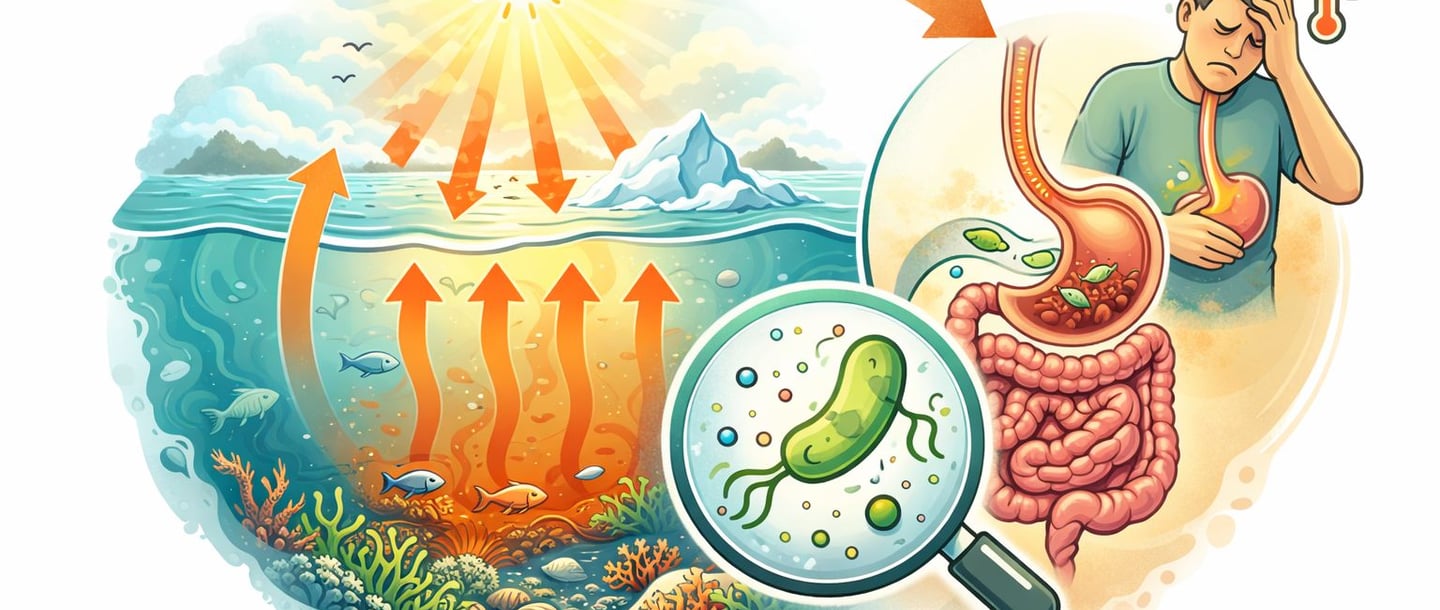
By focusing on ocean warming as a key part of climate change, this study explores how warmer seas amplify the risk of zoonotic pathogen emergence and transmission. Specifically, it focuses on the genus Vibrio as a model for understanding climate-sensitive infections and their impact on human health. This paper seeks to address the central question: to what extent does ocean warming influence the spread of Vibrio infections, and what are the resulting public health implications? This study brings together climate science, microbiology, and public health to show how environmental change and disease emergence are deeply connected.
HEALTHCARECLIMATE CHANGESUSTAINABILITYCELLSBIOLOGYMARINE SCIENCESROOTS
Guy-Bakhos Douaihy, Nour Abou Fares
3/4/202615 min read
1. Introduction:
The Earth’s climate system is a complex, interconnected network linking the atmosphere, oceans, land, cryosphere, and biosphere, operating across timescales from months to millennia (Le Treut et al., 2006). Historically regulated by natural processes such as orbital shifts, solar variability and volcanic eruptions, the current rapid climate warming is largely driven by human activity, marking this change as one the biggest challenges of the twenty-first century. (Cheng et al., 2019). This disparity has the longest-lasting and most sensitive record in the ocean, which absorbs nearly 93% of the excess energy generated from anthropogenic warming. Oceanic heat content (OHC) has therefore emerged as one of the most evident signifiers of climate change in the world, offering a strong measure of human influence.
The increase in ocean heat content over the last half century has highlighted the magnitude and pace of anthropogenic climate change. (Cheng et al., 2019) Scientific observations have repeatedly shown that the ocean is warming more rapidly than at any other time in recorded history and the rate of this warming has accelerated in recent decades. This rise in seawater heat does not just warm the seas, it also reshapes the entire climate system. Higher ocean temperatures are contributing to more devastating storms, rising sea levels via thermal expansion, and polar ice sheets becoming unstable. They also help to bleach the coral reefs en masse, diminish the oxygen levels that marine life relies on as well as destabilize the ecosystem. This means, ocean warming is not only the most reliable indicator of climate change but also the driver of environmental transformation with far-reaching consequences, specifically for marine biodiversity. (Cheng et al., 2019).
Zoonotic diseases, or zoonoses, are infections that can be readily transmitted between animals and people and span a broad spectrum of possible pathogens including bacteria, viruses, parasites, fungi, and even prions (WHO, 2020). They are among the world’s most pressing health challenges because it is estimated that 60% of all human-pathogenic agents are zoonotic in nature, and nearly three-quarters of all emerging infectious diseases are of animal origin (Rahman et al., 2020). The impact of zoonoses is far-reaching: they contribute to the sickness of over 2 billion individuals and the death of millions of people annually around the world, as well as economic losses due to the reduced productivity of livestock and trade prohibitions (Grace et al., 2017). They spread through various routes, including direct contact with animals, consumption of contaminated food and water, vector-borne transmission, and environmental reservoirs. This reflects a complex interface between humans, animals, and ecosystems. Climate change, international trade, urban expansion, and ecological disruption are reshaping how zoonotic diseases emerge and spread. These changes make the prevention and control of zoonoses impossible without adopting the One Health approach that considers human, animal, and environmental health (WHO, 2020; Rahman et al., 2020).
The marine environment, particularly coastal and estuarine systems, often serves as a natural reservoir, a biological host for zoonotic bacteria. Among these, the genus Vibrio is of special concern. Vibrio are curved Gram-negative rods belonging to the family Vibrionaceae, composed of more than 140 species (only about a dozen are pathogenic to humans) (Baker-Austin et al., 2017). Pathogenic Vibrios can be broadly categorized into cholera-causing species, such as V. cholerae, and vibriosis-causing species, like V. vulnificus and V. parahaemolyticus. Such bacteria have developed various strategies to survive in the marine ecosystems, facilitating their continued transmission to humans through seafood consumption, contact with seawater, or wounds. Long-term surveillance data show that infection rates in the United States and Northern Europe have increased in tandem with rising sea surface temperatures, illustrating how climate change fosters Vibrio proliferation and human exposure (Baker-Austin et al., 2017). Moreover, the increase and maintenance of these pathogens are further encouraged by climate-related alterations in ocean salinity.
By focusing on ocean warming as a key part of climate change, this study explores how warmer seas amplify the risk of zoonotic pathogen emergence and transmission. Specifically, it focuses on the genus Vibrio as a model for understanding climate-sensitive infections and their impact on human health.
This paper seeks to address the central question: to what extent does ocean warming influence the spread of Vibrio infections, and what are the resulting public health implications? This study brings together climate science, microbiology, and public health to show how environmental change and disease emergence are deeply connected.
2. Thorough Overview of Vibrio Cholerae:
Vibrio is a genus of Gram-negative, curved rod-shaped bacteria in the Vibrionaceae family. They are abundant in aquatic environments and move using a polar flagellum. (Sampaio et.al., 2022). With approximately 147 species and 4 subspecies discovered, the Vibrio genus presents as remarkably diverse, yet only around a dozen of these species are known to cause disease in humans (Sampaio et.al., 2022). Of these species, Vibrio cholerae is of interest.
Vibrio cholerae, the primary agent that causes cholera, is a zoonotic acquired pathogen naturally occurring in marine ecosystems and can survive independently of human hosts (Constantin de Magny and Colwell, 2009). Vibrio cholerae spreads to humans via the fecal-oral route, typically through ingestion of contaminated water and food in areas with poor sanitation (CDC). Due to its epidemic and pandemic potential, World Health Organization (WHO) lists Vibrio cholerae as a public health threat.
Vibrio cholerae includes over 200 serogroups based on O-antigen structure of lipopolysaccharide. Only the O1 and O139 serogroups produce the cholera toxin (CTX), enabling them to cause cholera. Notably, serogroups outside of O1 and O139 do not produce CTX and generally cause mild gastroenteritis outbreaks, sporadic bacteremia, and wound infections, but not cholera. Furthermore, over 85% of non-O1 serogroups, including O139, a capsule, critical for virulence in extraintestinal infections, can be found (Montero et.al., 2023).
Cholera, caused primarily by the O1 and O139 toxigenic Vibrio Cholerae spp., is an acute diarrheal illness that can be fatal if left untreated due to severe dehydration. This disease is acquired by ingesting water or food contaminated with pathogenic Vibrio cholerae and is most commonly associated with poor hygiene, inadequate sanitation, and unsafe water supplies. Treating an individual infected with cholera requires ample and prompt rehydration, and it is vaccine-preventable (Baker-Austin et.al., 2016).
According to the CDC, symptoms of Cholera include:
● Milky white diarrhea, often described as “rice-water stools”
● Vomiting
● Leg cramps
● Restlessness or irritability
● Rapid dehydration
● Tachycardia
● Loss of elasticity in the skin
● Dry mucus membranes
● Hypotension
● Loss of the skin’s elasticity
Since 1817, seven cholera pandemics have occurred, with the seventh beginning in 1961 and continuing to the present (Montero et.al., 2023)
3. Pathogenesis of Vibrio Cholerae:
The pathogenic success of V. Cholerae is attributed to the coordinated action of various virulence factors that it employs once inside the host. These virulence factors ensure the survival and transmission within the host.
3.1. Inoculum size:
Vibrio Cholerae infections mainly occur through the fecal-oral route. To reach the small intestine, V.Cholerae must first pass through the stomach and survive the low pH of the gastric environment. Because V. cholerae is highly sensitive to stomach acid, infection typically requires about 10^6 to 10^8 organisms. Furthermore, ingesting the bacteria with food that buffers the gastric pH or with conditions that reduce the stomach acidity, such as antacid use or malnutrition, greatly reduces the inoculum size and increases the individual’s susceptibility to cholera (Rodriguez et al., 2024).
3.2. Motility and Chemotaxis:
Guided by chemotactic responses, V.Cholerae swims though the viscous intestinal mucus, moving toward niches that favor colonization. A single, polar flagellum confers the bacterium the ability to navigate the mucus layers of the intestine. Furthermore, the Cholerae’s flagellum is a crucial tool that the bacterium needs to bore through the mucus to access the epithelial surface of the intestine for colonization. It is worth emphasizing that during colonization, V. Cholerae downregulates its chemotaxis and may even shed the polar flagellum. This helps the bacterium conserve energy as well as trigger regulatory pathways that promote virulence factor expression (Ramamurthy et al., 2020).
3.3. CT:
Among the many virulence factors it deploys, the cholera toxin (CT) is V. cholerae’s most potent weapon, responsible for the hallmark rice-water diarrhea. This 84-kDa holotoxin is composed of one enzymatically active A subunit as well as five receptor-binding B subunits. The bacterium secretes CT once it reaches the intestinal lumen. The B pentamer (the five B subunits) binds to GM1 ganglioside receptors that are present on the surface of enterocytes. CT is then endocytosed via retrograde transport from the Golgi apparatus to the endoplasmic reticulum. The A1 subunit activates host Gₛα, increasing cAMP levels that open CFTR chloride channels and inhibit sodium uptake, driving massive water and electrolyte secretion the intestinal lumen. This effectively turns the small intestine into a water-secreting organ that produces severe diarrhea. The resulting diarrhea leads to life-threatening dehydration without prompt medical treatment (Ramamurthy et al., 2020).
Following the replication and toxin production, bacteria are shed in large amounts in diarrheal fluid (Ojeda Rodriguez et al., 2024)
4. The immunological mechanisms involved in the pathogenesis of Vibrio cholerae
The Gram-negative bacterium, Vibrio cholerae, triggers an acute immune response primarily through lipopolysaccharide (LPS), which activates intracellular and extracellular pattern recognition receptors (PRRs) upon entering the mucosa. These receptors recognize the components of this pathogen and activate downstream signaling pathways, leading to the activation of inflammatory cascade. This acute response activates local, as well as systemic immune responses, with antigens carried to Mucosa-Associated Lymphoid Tissues (MALT) and secondary lymphoid organs. At site of infection, a subset of lymphocytes with gut-homing receptors contributes to mucosal immunity.
CT, possibly along with LPS, further amplifies the immune response by triggering cytokine release and activating NF-κB and MAPK/p38 pathways. As a result, various cytokines are produced, such as IL-1β, IL-6, and IL-12β, which help coordinate the immune system’s response to infection. Additionally, type I interferons (IFNs), which are important in the antiviral immune response, are produced. These signals recruit immune cells, including T helper 17 (TH17) cells that activate neutrophils to fight infection. These cells also support immunoglobulin A (IgA) to protect mucosal surfaces, like the intestines, where Vibrio cholerae causes infection (Naidu, 2022).
Despite the activation of amplified immune responses, Cholera remains a challenge because V. cholerae has evolved mechanisms to persist in the intestines, evading immune detection. Their superior ability to go undetected contributes to the severity of the disease by promoting fluid loss and enhancing bacterial survival. Pre-existing conditions, such as malnutrition and immune deficiencies, reduce the immune efficiency and worsen cholera outcomes. As the body recovers, memory responses are established, ensuring that the immune system can respond more rapidly to future infections. This memory ensures long-term protection and rapid response to future infections (Naidu, 2022).
5. Environmental Reservoirs and Vibrio Proliferation in Warming Water Bodies
Vibrio cholerae is found in diverse geographical areas, ranging from the tropical areas, such as the Bay of Bengal, to temperate waters in South America, Europe and temperate regions globally, suggesting that V. cholerae is highly adaptable to different water conditions and climates. It prospers in both coastal as well as estuarine environments which have fluctuating temperatures and salinity levels. The warming of water bodies and changes in salinity significantly affect V. cholera’s survival and growth. It thrives in water warmer than 15°C and grows best in low-salinity environments, typically below 25 ppt, although it can tolerate higher salinity (Jutla et al., 2011).
Various aquatic ecosystems serve as reservoirs for V. cholerae including plankton
(e.g., zooplankton and phytoplankton) and biofilms on algae. Biofilm formation protects the bacterium from environmental pressures like predation and offers vital nutrients, supporting its survival. These environments allow the pathogen to persist even without a human host, carry it to new locations, and consequently promote the spread of cholera. These environments allow the pathogen to persist, even without a human host, carry them to new locations and, consequently, promote the spread of cholera (Lutz et al., 2013).
In addition, V. cholera’s key survival strategy is the ability to enter the viable but non-culturable (VBNC) state. While in the VBNC state, the bacteria do not grow but remain metabolically active, allowing them to survive in aquatic environments during nutrient scarcity or temperature extremes. This allows the bacterium to maintain a long-term, dormant presence until the conditions become conducive to growth (Lutz et al., 2013).
Similar to its dormancy in VBNC state, V. cholerae employs defense mechanisms against predation from bacterivorous organisms. Such mechanisms include formation of biofilms that act as a protective shield while facilitating nutrient access. The nature of biofilm formation enables the bacterium to travel with mobile hosts, like zooplankton, thereby spreading cholera to new locations (Lutz et al., 2013).
6. Cholera Outbreaks Driven by Climate Change: Case Studies by Region
To examine how climate change affects cholera outbreaks, we consider three case studies from different global regions.
6.1 Pakistan
Cholera is a common public health concern in Pakistan, with recurrent outbreaks, especially in areas lacking adequate water sanitation infrastructure. Recent outbreaks are linked to environmental changes and have become more frequent due to climate change. Pakistan’s location, sharing borders with India, Afghanistan, Iran, and China, makes it highly vulnerable to waterborne diseases and contamination by Vibrio cholerae, particularly during the monsoon season and extreme weather events such as floods (Gwenzi et al., 2019).
Rising temperatures, combined with heatwaves, create ideal conditions for V. cholerae to thrive and enhance cholera transmission in freshwater bodies. Heat waves, such as extreme, record-breaking heat temperature in Jacobabad, which hit 51°C (123.8°F), directly correlate with accelerated bacterial growth. Similarly, rising sea levels increase the salinity of freshwater sources, facilitating contamination and worsening drinking water quality. This, in turn, erodes the ability to provide clean water to communities and exacerbates the cholera problem in vulnerable regions (Gwenzi et al., 2019).
Climate change has caused unpredictable rainfall patterns, resulting in severe flooding and increased cholera outbreaks. For example, the 2022 floods affecting Sindh, Punjab, and Balochistan contaminated drinking water supplies, spreading cholera across the region. The inability of communities to access sufficient clean water forces them to rely on unsafe, possibly contaminated water sources (Gwenzi et al., 2019).
6.2 Sub-Saharan Africa
Sub-Saharan Africa (SSA) has been the epicenter of cholera outbreaks, contributing to 86% of global cases and 99% of deaths (Gwenzi, 2019). Much, but not all, of SSA consists of inland areas with limited access to coastal and estuarine waters. Cholera outbreaks also occur inland, indicating that reservoirs extend beyond coastal zones to rivers, lakes, wetlands, shallow groundwater, and inadequately treated wastewater systems. These can all serve as reservoirs and enable the pathogen’s transmission.
Generally, Sub-Saharan Africa’s tropical climate, with wet, warm summers and cooler, dry winters, contributes to cholera outbreaks that frequently peak during the rainy season, showing the influence of rainfall, temperature, and water availability on Vibrio cholerae's growth. For instance, both outbreaks of 2008 and 2018 in Zimbabwe happened during the dry season in September, likely due to greater dependence on contaminated groundwater (Gwenzi, 2019).
Droughts limit access to safe water while heavy rains overwhelm sanitation systems. These and other extreme weather conditions can worsen outbreaks and distant climatic patterns may influence outbreaks across regions, not just locally.
Various environmental reservoirs contribute to cholera persistence. Risk of exposure increases with factors such as poor sanitation, high population density, and interconnected water sources. Other hydroclimatic factors influence bacterial growth, survival and movement. In addition, many SSA countries do not have enough environmental monitoring or historical climate data, which makes it difficult to predict and manage cholera outbreaks. Using modern research tools like GIS, remote sensing, genomics, machine learning, and data mining could improve understanding and control of cholera outbreaks (Gwenzi, 2019).
6.3 Latin America
Coastal regions of Latin America, particularly in Ecuador and Peru, have seen cholera re-emerge in recent decades, influenced by both environmental and climatic factors. Coastal estuarine systems are critical zones where ocean conditions interact with human activity. In Machala, monitoring showed persistent V. cholerae at five estuarine sites, with peak prevalence in low-income areas like Héroes de Jambelí and Puerto Bolívar Adentro.
As aforementioned, water, temperature, salinity, pH, and blue-green algae (BGA) density strongly influence V. cholerae abundance, with higher temperatures promoting BGA blooms that create favorable conditions for bacterial growth. Extreme climate events like El Niño intensify flooding, disrupt sanitation systems, and increase the likelihood of cholera outbreaks.
The ongoing presence of V. cholerae in estuarine waters highlights the importance of environmental transmission, as communities relying on these waters face increased infection risk due to inadequate sanitation, limited public health monitoring, and socio-economic vulnerability.
7. Effects of Ocean Warming on Vibrio cholerae Transmission:
Rising sea surface temperatures significantly alter V. cholerae’s environmental persistence and pathogenic potential.
One major consequence of ocean warming is the enhanced proliferation of bacteria. Warmer waters generally enhance bacterial survival, promoting rapid Vibrio growth and expanding its habitat range. For example, time-series field studies indicate an increase in Vibrio bacteria concentration at higher sea temperatures (M Schets et al., 2025). Higher temperatures shorten the V. cholerae’s replication time, enabling faster multiplication and elevating the bacterial load in water bodies. On the other hand, in cooler seasons V. Cholerae becomes dormant (Christaki et al., 2020). Climate-driven ocean warming extends the periods during which V. cholerae can multiply, resulting in higher accumulation in water bodies and increased infection risks.
In addition to increased abundance, elevated temperatures enhance V. cholerae’s virulence, with studies showing higher expression of virulence-related genes under warmer conditions. (Christaki et al., 2020).
8. Global Cholera Outbreak Trends Between 2019 and 2025:
Following years of continuous decline, cholera outbreaks made a notable comeback in the early 2020s.
According to the WHO, cholera outbreaks began rising in 2021 and 2022, marking a resurgence of the seventh cholera pandemic after decades of decline. In 2021, 23 countries had cholera outbreaks. This number increased in 2022 to 29 countries (WHO, 2022).
Notably, several countries that had been cholera-free for decades, such as Lebanon and Syria, experienced new outbreaks in 2022, while Haiti reported a resurgence after three years without cases (UNICEF, 2023).
This upward trend continued into 2023 and 2024, reaching about 51 countries in 2024. This marks the highest number of countries reporting cholera outbreaks in modern history (WHO, 2025).
Cholera mortality has also risen; for example, fatality rates in Malawi and Nigeria reached 3%, surpassing the acceptable 1% limit (UNICEF, 2023); however, the WHO acknowledges that these figures likely underestimate the true cholera burden (WHO, 2025).
9. Conclusion:
In summary, the steady increase in global temperature and ocean heat is altering the planet’s climate balance. It is also transforming the dynamics of infectious disease transmission. As oceans get warmer, marine environments have become more favorable habitats for zoonotic microorganisms, including V. cholerae. Warmer waters, unstable salinity levels, and more frequent extreme weather events create conditions that enhance the bacterium’s survival, growth, and spread. Pakistan, regions across Sub-Saharan Africa, and parts of Latin America reveal that climate disruptions, such as floods and droughts, correlate strongly with the renewal of cholera outbreaks. In this context, Vibrio cholerae acts both as a signal of environmental instability and as an organism that thrives within it. Confronting this challenge calls for integrated measures that link climate change mitigation with public-health preparedness. Prioritizing sustainable water management, implementing early-warning systems, and developing health infrastructures capable of adapting to environmental change are all vital components of this response. Ultimately, the connection between ocean warming and Vibrio cholerae spread shows that protecting the planet’s climate and protecting human health are inseparable. Efforts to reduce greenhouse gas emissions and preserve ecological balance are environmental goals as well as essential measures for ensuring global health in an increasingly unstable climate.
DOwnload the full document
References:
Baker-Austin, C., Oliver, J. D., Alam, M., Ali, A., Waldor, M. K., Qadri, F., & Martinez-Urtaza, J. (2017). Vibrio spp. infections. Nature Reviews Disease Primers, 3(1), 16082. https://doi.org/10.1038/nrdp.2016.82
Baker-Austin, C., Trinanes, J., Gonzalez-Escalona, N., & Martinez-Urtaza, J. (2016). Non-Cholera vibrios: The microbial barometer of climate change. Trends in Microbiology, 25(1), 76–84. https://doi.org/10.1016/j.tim.2016.09.008
Cheng, L., Abraham, J., Hausfather, Z., & Trenberth, K. E. (2019). How fast are the oceans warming? Science, 363(6423), 128–129. https://doi.org/10.1126/science.aav7619
Christaki, E., Dimitriou, P., Pantavou, K., & Nikolopoulos, G. K. (2020). The impact of climate change on cholera: A review on the global status and future challenges. Atmosphere, 11(5), 449. https://doi.org/10.3390/atmos11050449
Cholera and climate: A demonstrated relationship. (2009). PubMed. https://pubmed.ncbi.nlm.nih.gov/19768169/
Cholera. (2025, May 29). Centers for Disease Control and Prevention. https://www.cdc.gov/cholera/about/index.html
Grace, D., Mutua, F., Ochungo, P., Kruska, R., Jones, K., Brierley, L., … Ochungo, P. (2017). Mapping of poverty and likely zoonoses hotspots. International Livestock Research Institute (ILRI). https://hdl.handle.net/10568/72405
Gwenzi, W., & Sanganyado, E. (2019). Recurrent cholera outbreaks in sub-Saharan Africa: Moving beyond epidemiology to understand the environmental reservoirs and drivers. Challenges, 10(1), 1. https://doi.org/10.3390/challe10010001
Jutla, A. S., Islam, S., & Colwell, R. R. (2011). Environmental factors influencing occurrence of Vibrio cholerae in the Bay of Bengal. Applied and Environmental Microbiology, 77(9), 2980–2985. https://doi.org/10.1128/AEM.02597-10
Lutz, C., Erken, M., Noorian, P., Sun, S., & McDougald, D. (2013). Environmental reservoirs and mechanisms of persistence of Vibrio cholerae. Frontiers in Microbiology, 4, 375. https://doi.org/10.3389/fmicb.2013.00375
Montero, D. A., Vidal, R. M., Velasco, J., George, S., Lucero, Y., Gómez, L. A., Carreño, L. J., García-Betancourt, R., & O’Ryan, M. (2023). Vibrio cholerae, classification, pathogenesis, immune response, and trends in vaccine development. Frontiers in Medicine, 10. https://doi.org/10.3389/fmed.2023.1155751
Naidu, A. (2022). Mucosal and systemic immune responses to Vibrio cholerae infection: Revisiting early transcriptional responses. Journal of Applied Microbiology, 133(6), 2112–2126. https://doi.org/10.1111/jam.15546
Rahman, M. T., Sobur, M. A., Islam, M. S., Ievy, S., Hossain, M. J., El Zowalaty, M. E., … Ashour, H. M. (2020). Zoonotic diseases: Etiology, impact, and control. Microorganisms, 8(9), 1405. https://doi.org/10.3390/microorganisms8091405
Ramamurthy, T., Nandy, R. K., Mukhopadhyay, A. K., Dutta, S., Mutreja, A., Okamoto, K., Miyoshi, S., Nair, G. B., & Ghosh, A. (2020). Virulence regulation and innate host response in the pathogenicity of Vibrio cholerae. Frontiers in Cellular and Infection Microbiology, 10. https://doi.org/10.3389/fcimb.2020.572096
Rodriguez, J. A. O., Hashmi, M. F., & Kahwaji, C. I. (2024, May 1). Vibrio cholerae infection. StatPearls. https://www.ncbi.nlm.nih.gov/books/NBK526099/?utm_source=chatgpt.com
Ryan, S. J., Stewart-Ibarra, A., Ordóñez-Enireb, E., Chu, W., Finkelstein, J. L., King, C. A., … Polhemus, M. (2018). Spatiotemporal variation in environmental Vibrio cholerae in an estuary in southern coastal Ecuador. International Journal of Environmental Research and Public Health, 15(3), 486. https://doi.org/10.3390/ijerph15030486
Sampaio, A., Silva, V., Poeta, P., & Aonofriesei, F. (2022). Vibrio spp.: Life strategies, ecology, and risks in a changing environment. Diversity, 14(2), 97. https://doi.org/10.3390/d14020097
Schets, F. M., Pol-Hofstad, I. E., Van Den Berg, H. H. J. L., & Schijven, J. F. (2025). Climate change-related temperature impact on human health risks of Vibrio spp. Microorganisms, 13(8). https://doi.org/10.3390/microorganisms13081893
UNICEF. (2023, May). Cholera: A global call to action [PDF]. https://www.unicef.org/media/140336/file/Cholera:%20A%20global%20call%20to%20action.pdf
World Health Organization (WHO). (2020). Zoonoses. https://www.who.int/news-room/fact-sheets/detail/zoonoses
World Health Organization. (2022, December 16). Cholera – Global situation. https://www.who.int/emergencies/disease-outbreak-news/item/2022-DON426
World Health Organization. (2025, September 12). Cholera kills more people for second consecutive year, while prevention and treatment available. https://www.who.int/news/item/12-09-2025-cholera-kills-more-people-for-second-consecutive-year-while-prevention-and-treatment-available#:~:text=Sixty%20countries%20reported%20cases%20in,of%20all%20reported%20cases