Strategizing from 7 cities across the globe

The Role of CRIPSR in Addressing Neuropsychiatric Disorders through Gene Editing
One of the most promising tools in modern genetics is CRISPR, a gene-editing system that allows precise and targeted changes to DNA. With the emergence of CRISPR and related gene-editing technologies, new possibilities are being explored for targeting the genetic components of these neuropsychiatric conditions. While CRISPR has shown success in treating some single-gene disorders, its potential in addressing complex behavioral conditions like those affecting mental health remains largely theoretical.
ROOTSMENTAL HEALTHHEALTHCAREGENETICSPSYCHIATRYBIOLOGY
Nicholas El Kahi
1/24/20268 min read
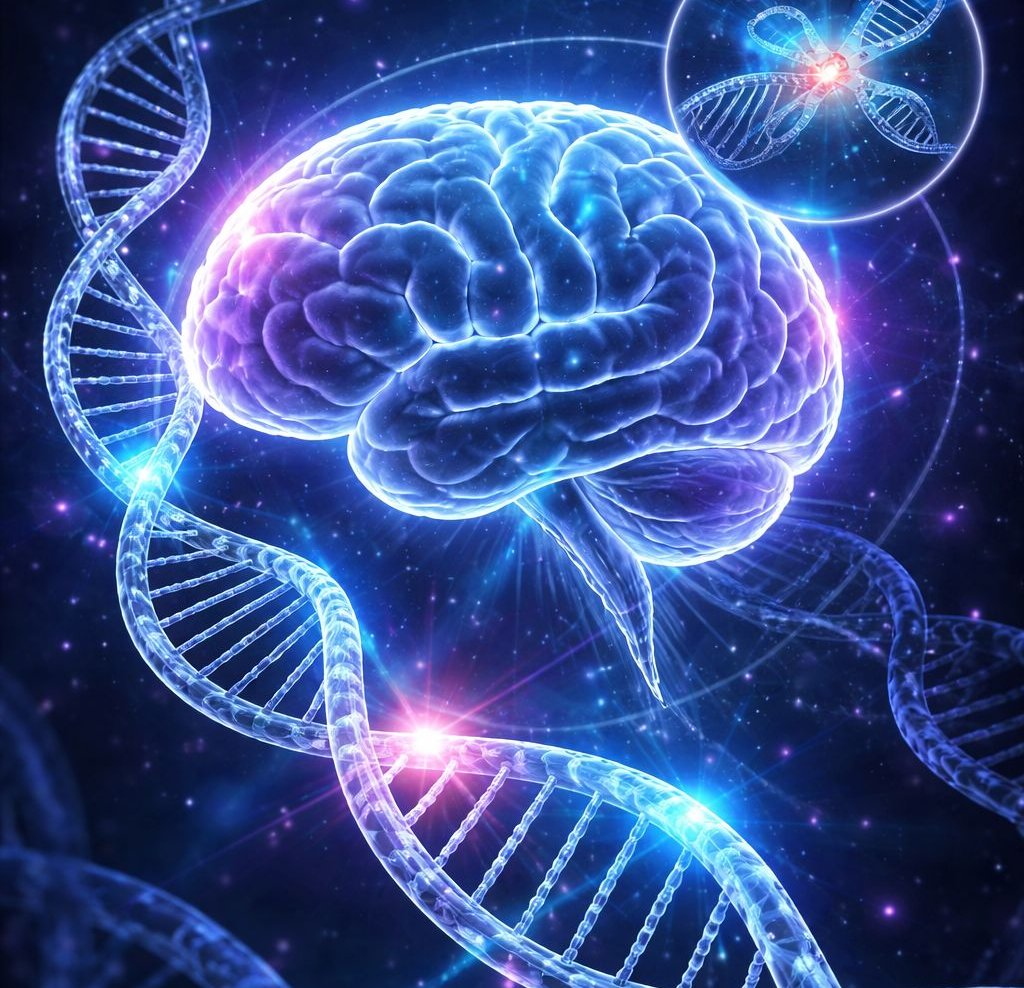
Almost everyone knows someone struggling with anxiety, depression, or ADHD. Mental health disorders affect hundreds of millions of people worldwide. The World Health Organization predicts that by 2030, depression will become the leading cause of disability across the globe. Disorders like schizophrenia and bipolar illness often last a lifetime, placing heavy emotional and financial burdens on patients, families, and societies. Current treatments, whether medications or therapy, are often limited to easing symptoms rather than providing cures, and relapse rates remain high. But what if we could tackle these conditions at their roots, deep within our DNA? Over the past two decades, research has shown that many psychiatric disorders have a strong genetic component, involving hundreds of risk variants that influence how the brain develops and functions. This is where CRISPR enters, a revolutionary gene-editing technology that allows scientists to precisely cut and modify DNA inside living cells. Originally discovered as a bacterial defense mechanism, it now holds the potential to reshape how we think about diseases, including those of the mind. Could CRISPR one day allow us to rewrite the genetic risk factors that contribute to mental illness? And if so, should we?
For much of history, mental illness was seen as purely psychological or even moral in nature. Today, science paints a different picture: many psychiatric disorders are influenced by genetics. Research has identified key genes linked to conditions such as ADHD, depression, bipolar disorder, and schizophrenia. For instance, variants in dopamine transporter genes like DAT1 and dopamine receptor genes like DRD4 are often associated with attention-deficit hyperactivity disorder (ADHD). Depression has been linked to changes in the serotonin transporter gene (SLC6A4) and in BDNF (brain-derived neurotrophic factor), which affects how neurons grow and form connections. In bipolar disorder, mutations in calcium channel genes such as CACNA1C and in scaffolding proteins like ANK3 play a role in the instability of mood regulation. Schizophrenia has been associated with genes including DISC1 (Disrupted-in-Schizophrenia 1), COMT (Catechol-O-methyltransferase), and NRG1 (Neuregulin 1), all of which influence how the brain develops and processes neurotransmitters. Even psychopathy and impulsive aggression have been linked, controversially, to variants of the so-called “warrior gene,” MAOA, which regulates serotonin and dopamine metabolism.
But while genetics clearly play a role in our mental health, they do not solely define who we are. Unlike single-gene disorders such as Huntington’s disease, psychiatric illnesses are polygenic: they arise from the combined influence of many small genetic variations, each contributing to only a modest increase in risk. Environmental factors such as trauma, stress, socioeconomic hardship, or substance abuse interact with these genetic vulnerabilities in complex ways. For example, someone may carry a risk allele for depression but only develop symptoms under prolonged stress. This gene environment interplay explains why not everyone with a “risk gene” develops a disorder, and why mental illness manifests so differently from person to person. Understanding this complexity is crucial before imagining how tools like CRISPR might intervene.
At its core, CRISPR is a tool that lets scientists edit DNA with remarkable accuracy. CRISPR is a defense system naturally used by bacteria to fight off viruses. In the lab, researchers pair this system with a protein called Cas9, which acts like molecular scissors. Guided by a short piece of RNA, Cas9 is directed to a specific spot in the genome, where it makes a cut in the DNA. Once the DNA is cut, the cell’s own repair machinery can be harnessed either to disable a gene, correct a mutation, or insert a new sequence. This flexibility has transformed biology, making CRISPR one of the most powerful scientific breakthroughs of the 21st century. Variations of the system allow for even more precision: CRISPR interference (CRISPRi) can switch a gene off without cutting it, CRISPR activation (CRISPRa) can turn genes on, and newer tools like base editors and prime editors can change single DNA letters without breaking the strand at all.
Therefore, CRISPR could one day in theory be used to directly correct genetic variants that increase vulnerability to psychiatric conditions. For example, scientists could repair a faulty copy of the DISC1 gene in schizophrenia or fix mutations in calcium channel genes like CACNA1C that are implicated in bipolar disorder. In practice, this would mean intervening at the biological root of disease rather than managing symptoms after they appear. If successful, such an approach could reduce the severity of disorders or even prevent them in individuals carrying high-risk variants.
Beyond repairing harmful mutations, CRISPR could also be used to regulate how genes are expressed. Using CRISPR interference (CRISPRi) or activation (CRISPRa), researchers could silence genes linked to aggressive or impulsive behavior such as hyperactive forms of the MAOA gene or enhance the activity of protective genes. Boosting levels of BDNF, for instance, has been shown to increase resilience against depression by supporting the growth and survival of neurons. This kind of gene “fine-tuning” could open new therapeutic avenues that are more targeted than current psychiatric medications, which often affect the brain broadly and come with significant side effects.
Although CRISPR has not yet been tested in humans for psychiatric disorders, early experiments in animals and lab-grown brain tissue are already revealing its power. In one study, researchers used CRISPR to alter the DISC1 gene in mice, a mutation long associated with schizophrenia. The edited mice developed brain changes and behaviors that closely mimicked symptoms of the disorder, providing scientists with an unprecedented living model for studying its origins. In another line of work, scientists applied CRISPR to brain organoids, tiny clusters of neurons grown from stem cells, to remove or modify genes linked to autism and schizophrenia. These organoids developed abnormally, offering a direct glimpse into how genetic risk factors can shape the brain. By selectively switching genes on and off, researchers can observe how specific variants shape brain development, connectivity, and behavior. These experiments are beginning to reveal causal links between genes and psychiatric symptoms, offering insights that traditional methods could never provide. In this sense, CRISPR is already reshaping psychiatry—not as a cure, but as a tool to unlock the biological mysteries behind mental illness.
However, using CRISPR for mental health is paved with uncertainties. At the scientific level, one of the most pressing concerns is that mental disorders are not caused by single mutations but by the interplay of hundreds of genetic variations interacting with environmental and social factors. For example, depression can be linked to subtle changes across dozens of genes, each contributing only a small fraction to the overall risk. This complexity means that even if CRISPR successfully edits one “risk gene,” the impact on the disorder might be negligible or worse, could trigger unpredictable changes in brain function. Adding to this is the problem of off-target effects, where CRISPR unintentionally alters unrelated DNA sequences. Such changes might remain silent for years before manifesting into conditions like cancer, neurological deficits, or other unintended conditions. Researchers themselves admit that we still lack the ability to fully anticipate how a single edit in a brain-related gene will affect personality, cognition, or behavior.
Another unresolved issue is how gene editing might alter personality and identity. If CRISPR were used to modify someone’s brain cells to reduce symptoms of anxiety, would this also change their creativity, memory, or capacity for empathy? Would someone who undergoes such a therapy still feel like “themselves”? This uncertainty makes psychiatric applications more ethically fraught than physical diseases. While curing cystic fibrosis or sickle cell anemia through CRISPR is relatively straightforward since the goal is to fix a clear, life-threatening mutation, the idea of editing traits linked to thought and behavior is far murkier. As unlike fixing a broken gene in the lungs, altering a brain gene could affect how a person loves, laughs, and makes decisions, raising the question of whether or not CRISPR might unintentionally tamper with the essence of human individuality.
In addition to these challenges, there’s also ethical concerns which weigh just as heavily as the scientific ones. The most controversial debate is whether it is acceptable to use CRISPR to edit the human germline, that is, DNA that will be passed on to future generations. Altering embryos to “correct” risk genes for schizophrenia or autism, for example, could permanently change the genetic heritage of a family line without the consent of those future individuals. In 2018, the world was shocked when Chinese scientist He Jiankui announced that he had edited the genomes of twin girls, Lulu and Nana, to make them resistant to HIV. His experiment, widely condemned, highlighted the dangers of moving too fast with gene editing. Even though his work was not related to mental health, it illustrates the risks of using CRISPR prematurely in humans: the long-term effects on the children’s health and development remain unknown, and society must ask whether the experiment violated moral boundaries. If similar edits were attempted for psychiatric conditions, the stakes would be even higher, since the brain is the seat of personality, identity, and free will.
Moreover, religious and cultural perspectives also complicate the picture. Many faith traditions, such as Catholicism and Islam, emphasize the sanctity of life and the belief that humans should not “play God” by altering the genetic code of future generations. For religious leaders, the risk is not only about safety but also about moral limits: is it acceptable to erase traits considered part of human diversity? For instance, some disability advocates and theologians argue that attempting to eliminate autism or other neurodiverse conditions reduces people to their genetic risks, denying the value they bring to families and society. In this sense, CRISPR could reinforce stigma by suggesting that certain personalities or ways of thinking are “flaws” to be corrected.
For the foreseeable future, CRISPR is far more likely to be used as a research tool than as a direct “cure” for psychiatric disorders. By editing genes in lab-grown brain organoids and animal models, scientists can trace how genetic risk factors shape neural circuits, better understand the origins of mental illness, and test potential therapies. This approach may lead to the discovery of new drugs or targeted interventions that are safer and more realistic than direct gene editing in humans. Over the longer term, as the technology becomes more precise and reliable, CRISPR could be used in carefully selected cases to correct single, high-impact mutations that strongly predispose individuals to psychiatric conditions. Such possibilities, however, require rigorous scientific oversight, transparent regulation, and sustained public dialogue to balance innovation with ethical responsibility.
Ultimately, mental health disorders affect millions of people worldwide, and despite decades of research, current treatments remain largely focused on managing symptoms rather than addressing root causes. Genetic research has revealed that many psychiatric conditions from depression and ADHD to schizophrenia and bipolar disorder arise from complex interactions between dozens or even hundreds of genes, combined with environmental influences. CRISPR, with its ability to precisely edit DNA, offers an unprecedented opportunity to explore these genetic foundations. It has already transformed research by allowing scientists to study how genes influence brain development and behavior, using animal models and brain organoids to gain a clearer understanding of disorders like schizophrenia, autism, and depression.
Yet as powerful as CRISPR is, its promise is matched by significant scientific and ethical challenges. Uncertainties related to off-target effects, polygenic complexity, and the potential impact on personality and identity remain unresolved. At the same time, ethical, religious, and social concerns such as consent, inequality, stigma, and the potential misuse of gene-editing technologies continue to shape the debate. As we look ahead, CRISPR’s most immediate and realistic impact will likely remain in research, illuminating the origins of mental illness and inspiring new therapies, rather than offering definitive cures. Its future role in psychiatry will depend not only on scientific progress, but also on the ethical, cultural, and social frameworks that guide its use.
Download the full article
references:
Ma, Y., Zhang, L., & Huang, X. (2014). Genome modification by CRISPR/Cas9. The FEBS journal, 281(23), 5186–5193. https://doi.org/10.1111/febs.13110
Posner, J., Biezonski, D., Pieper, S., & Duarte, C. S. (2021). Genetic Studies of Mental Illness: Are Children Being Left Behind? Journal of the American Academy of Child and Adolescent Psychiatry, 60(6), 672–674. https://doi.org/10.1016/j.jaac.2020.12.031
Sebastian, R., Jin, K., Pavon, N., Bansal, R., Potter, A., Song, Y., Babu, J., Gabriel, R., Sun, Y., Aronow, B., & Pak, C. (2023). Schizophrenia-associated NRXN1 deletions induce developmental-timing- and cell-type-specific vulnerabilities in human brain organoids. Nature communications, 14(1), 3770. https://doi.org/10.1038/s41467-023-39420-6
Dubonyte, U., Asenjo-Martinez, A., Werge, T., Lage, K., & Kirkeby, A. (2022). Current advancements of modelling schizophrenia using patient-derived induced pluripotent stem cells. Acta neuropathologica communications, 10(1), 183. https://doi.org/10.1186/s40478-022-01460-2
Raposo V. L. (2019). The First Chinese Edited Babies: A Leap of Faith in Science. JBRA assisted reproduction, 23(3), 197–199. https://doi.org/10.5935/1518-0557.20190042