Strategizing from 7 cities across the globe

The Relative Interplay between Genetics and Environment on Personality and Behavior
Each individual has a different genetic makeup and environment which will interact to shape their personality. This correlation can have three types: passive correlation, evocative correlation, and active correlation. Passive correlation occurs when the person is provided with both genes and the environment from the parents.
ROOTSPSYCHOLOGYMENTAL HEALTHNEUROSCIENCEGENETICSBIOLOGY
Fatme Daou
1/9/20264 min read
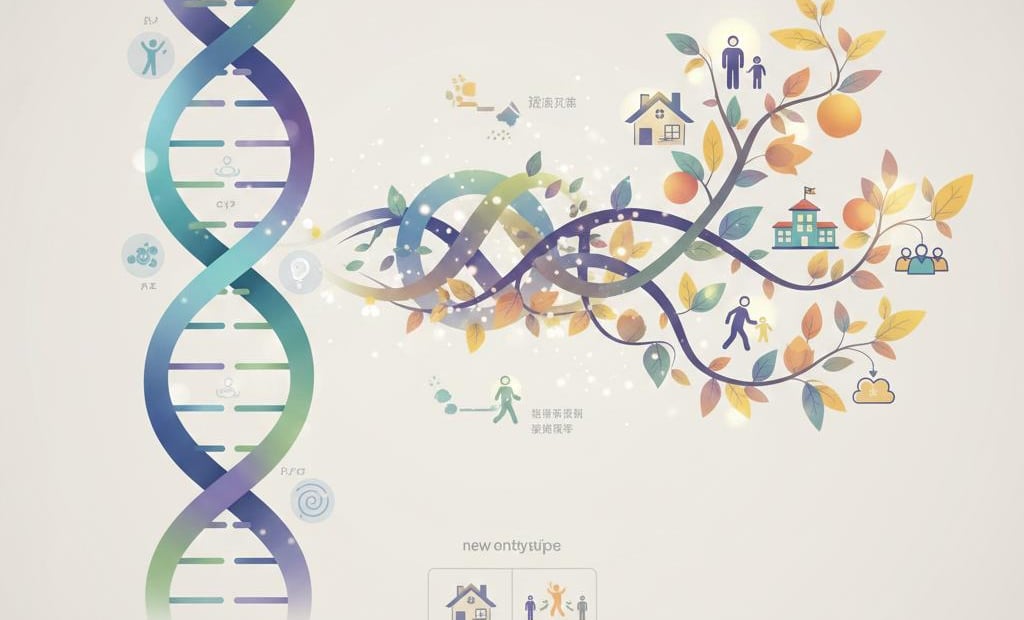
Haven’t we always wondered what our lives would look like if we lived in a different household? Plenty are the times where parents get blamed for their children’s behavior, actions, and sometimes even their personality traits, claiming that they didn’t raise their children right. However, this is not the only justification people attribute to the mentioned factors. In fact, how many times in our lives have we encountered the phrase: it runs in the family? Facing these two assumptions, we can confidently identify two factors that could contribute to personality shaping and behavior: Genetic Background and Environmental Factors. How do a person’s genetic and environmental backgrounds cooperate to build a personality and affect their behavior?
Personality is the combination of feelings, thoughts, and behavior that contributes to the uniqueness of a person. Behavior on the other hand, constitutes the actions a person endorses as a response to external stimuli. The source of origin of these two notions is under debate.
On one hand, many studies have issued the big contribution of genetics to personality and behavior. For instance, twin studies showed that identical twins – having exactly the same genome – showed remarkable similar personality traits despite being raised apart. Supporting this, the Big Five assessment (OCEAN) revealed a high similarity between neuroticism and extraversion among twins (Bouchard et al., 1990). Molecular genetics also showed links between genes and behavior. The DRD4 gene coding for a dopamine receptor – a neurotransmitter relating to the feeling of pleasure - highly correlated with novelty seeking behavior (Ebstein et al., 1996). Finally, adoption studies showed children sharing more traits with their biological parents rather than their adoptive parents, and more specifically, they shared antisocial behavior, where the person tends to voluntarily break the rules showing no regards towards right or wrong (Cadoret et al., 1985).
On the other hand, an individual’s environment has shown an impactful involvement in shaping personality and behavior. First, parenting styles can have different outcomes on children. There are four types of parenting: authoritative, authoritarian, permissive and neglectful. Studies show that children raised by authoritative parents have improved social skills and self-control compared to other children (Baumrind, 1967). Second, other environmental factors such as schooling, community involvement, or even support highly influence behavioral development and success in later life (Mischel et al., 1989). Last, there is evidence of a relation between genetic susceptibility, most specifically the gene MAOA, and environmental stressors such as abuse, which influences the antisocial behavior of the affected people (Caspi et al., 2003).
Given the last example, we can understand that personality is not fully dependent on one of these two factors but is rather dependent on the interplay between them.
Each individual has a different genetic makeup and environment which will interact to shape their personality. This correlation can have three types: passive correlation, evocative correlation, and active correlation. Passive correlation occurs when the person is provided with both genes and the environment from the parents. For example, the parents have a genetic prevalence for short tempers and keep a tense environment at home. Evocative correlation is when one’s genetically influenced trait elicits reinforcing responses. For instance, a sociable child gets more attention from people. Active correlation is when the person looks for the environment that best suits their personality.
Genes are also expressed in different manners. This “turn on” and “turn off” of genes is called epigenetics. It can be altered by many life factors such as stress or relaxation, which regulate hormones that can affect emotional stability. Constant exposure to the same factors drives this mild regulation or deregulation to shape personality. The 5-HTT gene, which is associated with a genetic susceptibility for depression, was shown to be expressed under stressful life events (Caspi et al., 2002, 2003). In addition, Rutter et.al (2006) encountered that genetic predisposition to problems in behavior can be buffered by adoption into nurturing families.
While the previous point elaborates an example of genes and environment interaction, it is crucial to note that other factors also play a huge role in building personality. For example, research on developmental and environmental psychology demonstrates that age shows a clear difference in personality formation between younger and older people. In fact, as individuals reach adulthood, personality traits tend to become stable leading to a stronger expression of genetic predispositions. However, during childhood, personality is more affected by environmental factors, which suggests that personality formation is affected differently across the lifespan of a person (McCrae et al., 2000).
Understanding these points, we can conclude that it is no longer a debate of nature vs nurture, but rather nature through nurture. This clearly explains why some people can develop differently despite having similar genetic makeup or environments. However, it is still important to note that there are a lot of debatable questions that still need elaboration. It is unclear how fixed personality traits are, and whether they are stable or malleable. Furthermore, are some traits universal or culture specific? Beyond nature and nurture, personality can affect behavior the same way behavior can affect personality. It is a continuous feedback loop where one reinforces the other, reflecting on the complexity of shaping personality.
In conclusion, both environment and genetics interplay together in order to shape personality. However, this interaction brings into question how behavior, shaped both by genes and environment, might in turn remodel personality.
download the full document
references:
Baumrind, D. (1967). Child care practices anteceding three patterns of preschool behavior. Genetic Psychology Monographs, 75(1), 43–88.
Bouchard, T. J., Lykken, D. T., McGue, M., Segal, N. L., & Tellegen, A. (1990). Sources of human psychological differences: The Minnesota study of twins reared apart. Science, 250(4978), 223–228.
Cadoret, R. J., O’Gorman, T. W., Heywood, E., & Troughton, E. (1985). Genetic and environmental factors in major depression. Journal of Affective Disorders, 9(2), 155–164.
Caspi, A., McClay, J., Moffitt, T. E., Mill, J., Martin, J., Craig, I. W., … Poulton, R. (2002). Role of genotype in the cycle of violence in maltreated children. Science, 297(5582), 851–854.
Caspi, A., Sugden, K., Moffitt, T. E., Taylor, A., Craig, I. W., Harrington, H., … Poulton, R. (2003). Influence of life stress on depression: Moderation by a polymorphism in the 5-HTT gene. Science, 301(5631), 386–389.
Ebstein, R. P., Novick, O., Umansky, R., Priel, B., Osher, Y., Blaine, D., … Belmaker, R. H. (1996). Dopamine D4 receptor (D4DR) exon III polymorphism associated with the human personality trait of novelty seeking. Nature Genetics, 12(1), 78–80.
McCrae, R. R., Costa, P. T., Ostendorf, F., Angleitner, A., Hřebíčková, M., Avia, M. D., … Smith, P. B. (2000). Nature over nurture: Temperament, personality, and life span development. Journal of Personality and Social Psychology, 78(1), 173–186.
Mischel, W., Shoda, Y., & Rodriguez, M. L. (1989). Delay of gratification in children. Science, 244(4907), 933–938.
Rutter, M., Moffitt, T. E., & Caspi, A. (2006). Gene–environment interplay and psychopathology: Multiple varieties but real effects. Journal of Child Psychology and Psychiatry, 47(3–4), 226–261.