Strategizing from 7 cities across the globe

The New American Security Framework Consolidating the New Middle East
American foreign policy in the Middle East, has not always been centered around active interventionism and democratization. In a few ways, current U.S. foreign policy bears a resemblance to the ‘Twin Pillars’ security framework under the Nixon doctrine, which also sought to shift the burden of security onto regional partners and avoid intervention by the American military.
MIDDLE EASTDEMOCRACYPOLITICSINTERNATIONAL LAWTRENDUS POLITICSINTERNATIONAL RELATIONS
Arman Karamian
2/21/202610 min read
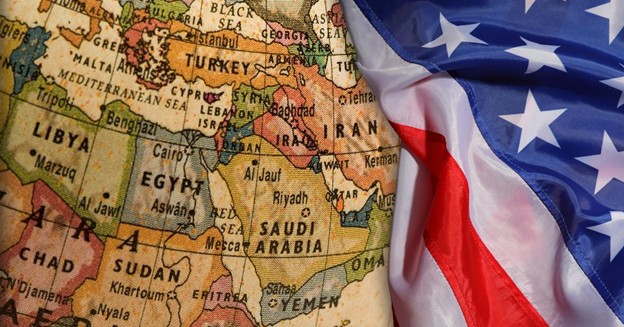
The first segment of President Trump’s second term has significantly focused on recalibrating U.S. foreign policy, its goals, and how to achieve them. From scrapping the North American Free Trade Agreement, or NAFTA (Lobosko, 2020), to emboldening the ‘Monroe Doctrine’ (Rodriguez, 2026), this recalibration has included redesigning the decades-old American security architecture in the Middle East following evident changes in the balance of power in the region since 2020.
The realignment comes after two decades of a foreign policy of liberal hegemony, which included attempts at nation-building based on liberal and democratic ideals. This has ranged between bold interventions aimed at toppling unstable autocrats like Saddam Hussein to more diplomatic means like supporting democratic governance and liberal civil society groups through USAID and so on. The new Middle East policy– spearheaded by President Trump since as early as 2020– has shifted from liberal transformation and prioritization of human rights to burden-sharing and security partnerships, as laid out in various pages of the 2025 National Security Strategy document (2025). The U.S./Trump administration, through this framework, seeks to establish regional stability, achieve economic prosperity, contain Iran, deter China, and reduce conventional U.S. military entanglements in the region’s conflicts.
Foreign policy in the Middle East, however, has not always been centered around active interventionism and democratization. In a few ways, current U.S. foreign policy bears a resemblance to the ‘Twin Pillars’ security framework under the Nixon doctrine, which also sought to shift the burden of security onto regional partners and avoid intervention by the American military.
The Nixon Doctrine and the ‘Twin Pillars’ Strategy
In January of 1968, Prime Minister Harold Wilson announced that nearly 150 years of British military presence east of the Suez – the Persian Gulf – would be coming to an end through an official withdrawal of all forces (Dawn, 2018).
The Twin Pillars arrangement, steamrolled by President Nixon and Henry Kissinger, sought to preemptively fill the vacuum in the region before the finalization of the British military’s withdrawal. This was done by practically enlisting Iran and Saudi Arabia as regional power brokers (Wachter, 2026). Their goals were to ensure regional stability, protect American and Western interests, and counter Soviet influence. The ‘twin pillars’ in and of itself was driven in large part by the Nixon Doctrine (U.S. Department of State, n.d.), which reaffirmed that the U.S. honored its treaties, albeit through a reduction of military commitments by sharing the burden of security with allies and regional partners. This was made possible and sustained for nearly a decade through billions of dollars’ worth of sales in arms and military hardware to the Shah and his monarchical neighbor, as well as through the provision of training and military expertise.
In retrospect, the policy had its successes and failures. As per Wachter (2026), it managed to contain an Iraq backed by the U.S.S.R. and see the failure of a communist uprising in Oman. These efforts helped sustain the Gulf’s stability, deny Soviet entry, and protect resources vital to American and Western interests. Although left unchecked, the policy did result in several shortcomings that proved to be detrimental (Wachter, 2026). It led to cases of reverse-leverage, an instance where U.S. foreign policy found the Shah to be more vital than vice-versa. Another case was when the Saudi Arabian pillar triggered the 1973 oil embargo following America’s support for Israel in the Arab-Israeli war. The flaw that proved to be disastrous, however, was the inability of the Americans to predict the collapse of the Iranian pillar in 1979 in light of the Islamic revolution. This resulted in the entire collapse of the framework itself.
The New Security Architecture
In order to fulfill their foreign policy goals, the Trump administration has embarked upon attempting to achieve several strategic objectives. These include elevating Saudi Arabia’s status as a leading power in the region, cementing Iran’s geopolitical losses following the October 7 attacks, expanding the Abraham accords, and keeping China out of the region.
A. Saudi Arabia
The U.S. has exerted a great effort not only in Saudi Arabia’s retention of its pillar-status but also in the elevation of the Kingdom’s role as a regional security partner. This has taken shape through several developments, the first of which being President Trump’s November 2025 designation of the kingdom as a major non-NATO ally (Kosaify, 2025). The designation came as a strategic defense agreement between both states, paving the way for a historically deeper military cooperation through the future provision of F-35 fighter jets, tanks, and so on. This heavily contests Israel’s long standing Qualitative Military Edge (QME), the principle that Israel must always militarily maintain the upper hand in the region (Froman, 2025); the assurance of which exists as a legally binding element in U.S. foreign policy. Upon concerns regarding a shift in Israel’s QME as a result of these developments, President Trump stated that Saudi Arabia is a “great ally” and that the Saudi Arabians and Israel are at a point where “both should get top of the line” (TRT World, 2025).
B. Consolidating Iranian Losses in Lebanon and Syria
Since the October 7 attacks by Hamas in 2023, Iran has experienced several critical setbacks and losses that have shaken its geopolitical standing and the region’s balance of power. The string of losses was initiated in 2024 after Israel’s war with Hezbollah in Lebanon, an essential lynchpin of Iranian influence. This war resulted in a ceasefire that has made disarmament of Hezbollah an imperative condition in line with UNSCR 1701, the UNSC resolution that stipulated the disarmament of armed groups like Hezbollah, cessation of hostilities between the group and Israel, etc. This ceasefire was followed by the loss of its key ally in the region and land-bridge to Lebanon, i.e. Assadist Syria, after the toppling of Bashar Al-Assad’s regime a month after the ceasefire. Six months later, the heavy exchange of missiles between Iran and Israel concluded with the U.S.’s bombing of its nuclear facilities. Even before a conclusive aftermath, the Trump administration has been quick to work on consolidating these losses in Lebanon and Syria as part of its broader goal of containing Iran.
Immediately after the November 2024 ceasefire in Lebanon, the U.S. has become the primary proponent of the Lebanese government’s functional role as the sole bearer of arms, mainly through the structural and monitored disarmament of Hezbollah. Washington has since leaned on the state and its top officials through envoys like Morgan Ortagus and Thomas Barrack in a bid to speed up the disarmament (U.S. Embassy in Lebanon, 2025 and The New Arab, 2025). Though coming at a slow pace, security in the South of Lebanon – a hotbed of conflict between Israel and Hezbollah and Palestinian groups in the past – has been centralized and placed back into the military’s hands, as announced by the Lebanese army recently (Bachega, 2026).
In regard to Syria, the U.S. has taken several strategic maneuvers in order to keep the new regime in its sphere of influence. A consistent element of the second Trump administration’s policy has been the political and diplomatic legitimization of the new president, Ahmad Al-Sharaa, strengthening Syria’s position within international circles through formal engagements in Washington (Abdul-Hussain, 2026). This comes as a far cry from the isolation of former Syrian president, Bashar Al Assad, including the removal of the Assad-era imposed Caesar sanctions (France 24, 2025). It is clear that Washington seeks to preserve this delicate balance of stability and security restructuring in the Levant, as reported by Shehadeh (2025), considering it exerts efforts in urging Israel to pursue more diplomatic means of engagement with Lebanon, as well as avoiding ensuring Al-Sharaa’s government is not destabilized.
C. The Abraham Accords
Other than being a part of Trump’s broader doctrine for ensuring stability and speeding up peace deals between Arab states and Israel, the Abraham Accords also hold the potential to pave the way for economic prosperity in the MENA region. This would come about through prospective trade deals that would follow the expansion of the accords. A study by Vakil and Quilliam (2023) showed that an existing trade deal between the UAE and Israel, based on removing tariffs alone and increasing bilateral trade, is estimated to generate $10 billion by 2027. Broader cooperation between regional players, if advanced by the Abraham Accords, would also allow for the initiation – and simultaneously act as an incentive for entering the accords – of larger scale economic frameworks like the India-Middle East-Europe Economic Corridor (IMEC). Such a framework that sees an economic corridor from India passing through Saudi Arabia, Jordan, and Israel towards Eastern Europe, would be able to generate tens of billions of dollars through lower costs in logistics and the structure of the supply chain alone (Hussain and Shafer, 2025).
D. Deterring China
Perhaps the most vital foreign policy goal for the Trump administration is deterring China from making further advancements and establishing a presence in the Middle East. China scored a significant yet turbulent, soft power victory in 2023 when it succeeded in flexing its diplomatic muscles, leading to rapprochement between Saudi Arabia and Iran (Esfandiary and Jacobs, 2023). Further engagement to discuss the regional developments took place after the 12-day war between Iran and Israel in 2025, as per The Arab Weekly (2025), when the Iranian foreign minister met Crown Prince Mohammad Bin Salman in Jeddah. Now, with the potential of regime change in Iran, albeit with great uncertainty, China would stand to lose a key ally both regionally and globally, and witness its soft power advancements disintegrate. With aggressive containment of Iran already underway (Lukiv and Armstrong, 2026), the elevation of Saudi Arabia’s status, and in keeping Lebanon and Syria close within the American sphere of influence, it is harder for China to penetrate the cementing balance of power for influence. Furthermore, the expansion of the accords and the subsequent implementation of IMEC would, in turn, accumulate more political capital in the face of Chinese attempts at diplomatic posturing.
Conclusion and Takeaways
The cascading developments in the region stand as a reflection of a cementing balance of power in the Middle East since 2020, as the pre-2019 status-quo has almost entirely evaporated. The Saudi Arabians have found their status elevated greatly under the new Trump administration, with Lebanon and Syria finding themselves closer to the American sphere of influence than ever before. With Iran under active containment and China kept out, American dominance in the region seems to have relatively surpassed any previous hegemonic status since the fall of the Soviet Union. However, difficulties still remain in maintaining this power dynamic, just as with the ‘Twin Pillars’ in the 1970s.
In Lebanon, the confidence in security within the new regional order remains bleak among many citizens, particularly as disarmament stalls and Israel continues its’ attacks on the South, two intricately intertwined issues (Salhani, 2026). The atmosphere within Syria remains uneasy as, according to Khalil (2026), Kurdish integration with the rest of Syrian society under the banner of the state has begun, followed by recent military advancements by Al-Sharaa’s government on Kurdish territory. Saudi Arabia, despite its deepening security cooperation with the United States, has publicly ruled out use of its airspace in any attack on Iran (The National, 2026). Analysts also believe that it seems to be weighing its options in balancing out the UAE-Israel dynamic with Qatar and Turkey (The New Arab, 2026) amid its opposition to an American strike on Iran and overall hesitance in committing to the Abraham Accords (Ravid and Basu, 2026). This signals the possibility of another case of reverse-leverage between the U.S. and Saudi Arabia, as previously noted. Although China has been successfully sidelined thus far, the longer the Abraham Accords and IMEC stall – as well as the growing respite the Iranian regime has had after recent climactic tensions – the further China is determined to attempt diplomatic and soft power breakthroughs, such as those of 2023.
Download the full document
References:
Abdul-Hussein, H. (December 23, 2025). Why was Sharaa invited to Washington but not Aoun? Foundation for Defense of Democracies. https://www.fdd.org/analysis/2025/12/23/why-was-sharaa-invited-to-washington-but-not-aoun/
Bachega, H. (January 6, 2026). Lebanese army takes control of south Lebanon. BBC News. https://www.bbc.com/news/articles/cj4ln977w0jo
Basu, Z. & Ravid, B. (January 30, 2026). Scoop: Saudi defense minister says Trump not bombing Iran would embolden regime. Axios. https://www.axios.com/2026/01/31/saudi-us-strike-iran-kbs-trump
Dawn. (January 17, 2018). From the past pages of Dawn: 1968: Fifty years ago: UK defence cuts. Dawn. https://www.dawn.com/news/1383365
France 24. (December 18, 2025). US Congress ends Assad-era Syria sanctions, opening door to investment. France 24. https://www.france24.com/en/middle-east/20251217-us-congress-ends-syria-sanctions
Froman, M. (November 21, 2025). The business of U.S.-Saudi diplomacy. Council on Foreign Relations. https://www.cfr.org/articles/business-us-saudi-diplomacy?utm_source=chatgpt.com
Hussain, A., & Shafer, N. (August 27, 2025). The India–Middle East–Europe economic corridor: Connectivity in an era of geopolitical uncertainty. Atlantic Council. https://www.atlanticcouncil.org/in-depth-research-reports/report/the-india-middle-east-europe-economic-corridor-connectivity-in-an-era-of-geopolitical-uncertainty/?utm_source=chatgpt.com
Khalil, H. (January 30, 2026). Syrian government reaches deal with Kurdish-led forces. BBC News. https://www.bbc.com/news/articles/cz0pj0n0yk3o
Kosaify, E. (November, 2025). Future sale of F-35 warplanes to Saudi Arabia after major non-NATO ally designation. Arab News. https://www.arabnews.com/node/2623140/saudi-arabia
Lobosko, K. (July 1, 2020). Trump officially scraps NAFTA, replacing it with USMCA. CNN. https://edition.cnn.com/2020/07/01/politics/usmca-nafta-replacement-trump
Lukiv, J. & Armstrong, K. (January 29, 2026). Trump warns Iran 'time is running out' for nuclear deal as US military builds up in Gulf. BBC News. https://www.bbc.com/news/articles/cly5pd459gko
Rodriguez, A. (January 6, 2026). Trump suggests Cuba and Colombia could be next targets. The Independent. https://www.independent.co.uk/news/world/americas/trump-greenland-venezuela-colombia-cuba-attack-which-countries-b2895133.html
Salhani, J. (January 29, 2026). Aoun’s tightrope: Daily Israeli attacks and Hezbollah’s refusal to disarm. Al Jazeera. https://www.aljazeera.com/features/2026/1/29/aouns-tightrope-daily-israeli-attacks-and-hezbollahs-refusal-to-disarm
Shehadeh, A. (December 15, 2025). US pushes diplomacy with Lebanon; Israeli military chief hints at renewed operations. LBCI. https://www.lbcgroup.tv/news/news-bulletin-reports/895011/us-pushes-diplomacy-with-lebanon-israeli-military-chief-hints-at-renew/en?utm_source=chatgpt.com
The Arab Weekly. (July 9, 2025). Saudi crown prince meets Araghchi as Riyadh pursues diplomacy with Iran. The Arab Weekly. https://thearabweekly.com/saudi-crown-prince-meets-araghchi-riyadh-pursues-diplomacy-iran
The National (January 28, 2026). Saudi Arabia will not allow airspace to be used for attack on Iran, Crown Prince says. The National. https://www.thenationalnews.com/news/gulf/2026/01/29/saudi-arabia-will-not-allow-airspace-to-be-used-for-attack-on-iran-crown-prince-says/
The New Arab. (January 28, 2026). Netanyahu says Saudi-Qatar-Turkey alliance killing 'Abraham Accords. The New Arab. https://www.newarab.com/news/netanyahu-says-saudi-qatar-turkey-bloc-killing-abraham-accords
https://www.axios.com/2026/01/31/saudi-us-strike-iran-kbs-trump
The New Arab. (December 2025). Syria welcomes lifting of US Caesar Act sanctions. The New Arab. https://www.newarab.com/news/syria-welcomes-lifting-us-caesar-act-sanctions
The White House. (December 2025). National Security Strategy of the United States of America. The White House. https://www.whitehouse.gov/wp-content/uploads/2025/12/2025-National-Security-Strategy.pdf
TRT World. (November 2025). Trump’s remarks on strategic military cooperation. TRT World. https://www.trtworld.com/article/b4a96ee7f6ca
U.S. Department of State. (n.d.). Foreign relations of the United States, 1969–1976, volume I: Foundations of foreign policy, 1969–1972 (Document 29). Office of the Historian. https://history.state.gov/historicaldocuments/frus1969-76v01/d29
U.S. Embassy in Lebanon. (February 2025). Deputy Special Envoy for the Middle East Morgan Ortagus press availability at the Presidential Palace following meeting with President Aoun. U.S. Embassy in Lebanon. https://lb.usembassy.gov/deputy-special-envoy-for-the-middle-east-morgan-ortagus-press-availability-at-the-presidential-palace-following-meeting-with-president-aoun/
Vakil, S. & Quilliam, N. (April 2023). The Abraham Accords and Israel–UAE normalization. Chatham House. https://www.chathamhouse.org/2023/03/abraham-accords-and-israel-uae-normalization
Wachter, S. (October 2, 2023). Effective bulwarks or pillars of sand? Benefits and risks of the Twin Pillars policy. Center for Security Policy Studies. https://csps.gmu.edu/2023/10/02/effective-bulwarks-or-pillars-of-sand-benefits-and-risks-of-the-twin-pillars-policy/?utm_source=chatgpt.com