Strategizing from 7 cities across the globe

Neuroinflammation: A Precursor or a Consequence of Neurodegenerative Diseases?
This paper argues that neuroinflammation is not just a byproduct of disease, it’s one of its root causes. By exploring the mechanisms behind it, the evidence across major disorders, and the promising new treatments targeting inflammation, this paper aims to prove that controlling neuroinflammation may be one of the most powerful strategies we have to slow–or even prevent–neurodegeneration.
ROOTSHEALTHCARENEUROSCIENCEBIOLOGY
Sarah Baaklini
1/9/202615 min read
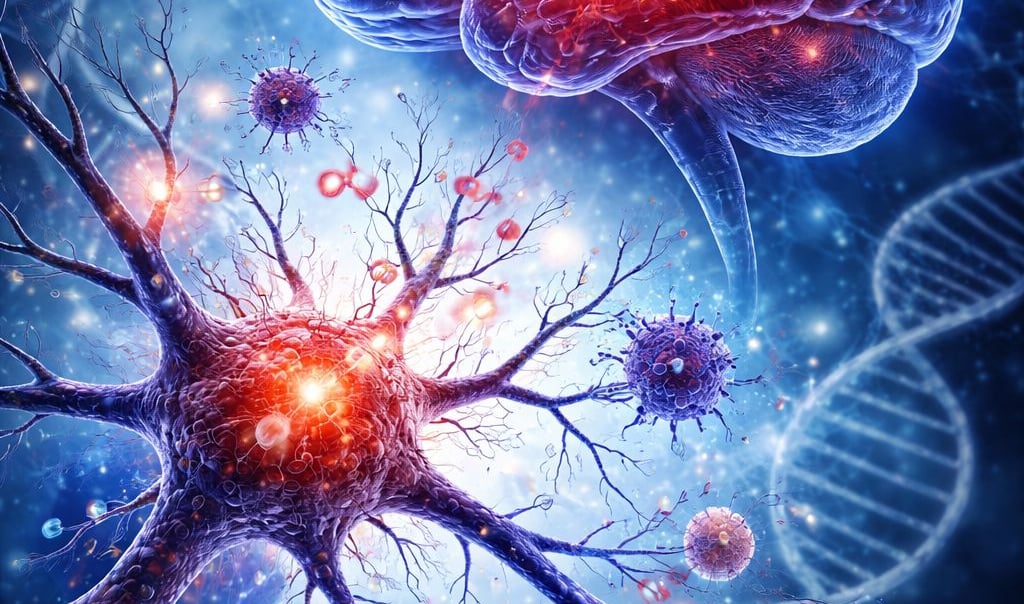
For a long time, scientists believed that the brain was mostly protected from the immune system. Thanks to the blood-brain barrier (BBB) and specialized brain cells, the central nervous system (CNS) was thought to be shielded from the kind of inflammation seen elsewhere in the body. But over the past two decades, research has shown that the brain has its own immune activity led by cells like microglia and astrocytes and that this response, when dysregulated, can do serious harm (Heneka et al., 2014; Amor et al., 2010). This type of immune activity is called neuroinflammation, and while it can be protective in the short term, if it becomes chronic or uncontrolled it may contribute to long-term brain damage.
In fact, neuroinflammation plays a dual role: while acute and regulated inflammatory responses are essential for tissue repair and pathogen defense; chronic or dysregulated inflammation leads to the release of harmful cytokines (e.g., IL-1β, TNF-α), reactive oxygen species, and chemokines that collectively contribute to synaptic dysfunction, neuronal death, and the progression of neurodegenerative disease (Glass et al., 2010) including Alzheimer’s disease (AD), Parkinson’s disease (PD), and Multiple Sclerosis (MS).
This paper argues that neuroinflammation is not just a byproduct of disease, it’s one of its root causes. By exploring the mechanisms behind it, the evidence across major disorders, and the promising new treatments targeting inflammation, this paper aims to prove that controlling neuroinflammation may be one of the most powerful strategies we have to slow–or even prevent–neurodegeneration.
I. Pathways of Neuroinflammation:
Building on the evolving understanding of the brain’s immune capabilities, it has become increasingly clear that neuroinflammation plays a far more active role in neurodegenerative disease than once believed. Rather than merely serving as a downstream consequence of neuronal damage, inflammation in the central nervous system (CNS) can act as a powerful driver of disease progression. The pathways that drive neuroinflammation involve a complex relationship between cellular actors and molecular signals. In particular, glial cells such as microglia and astrocytes, along with pro-inflammatory cytokines and structural disruptions like blood–brain barrier (BBB) breakdowns, contribute to a self-sustaining inflammatory environment that can persist for years. Most importantly, these processes do not act alone. Instead, they amplify one another, worsening synaptic dysfunction and accelerating neuronal loss. Understanding these interconnected mechanisms is essential for identifying where, when, and how interventions might be most effective.
I.a- Microglial Activation and Immune Dysregulation:
Microglia are the brain’s resident immune cells, constantly monitoring the CNS for signs of infection, injury, or abnormal protein accumulation. In healthy conditions, they help maintain synaptic pruning, clear cellular debris, and secrete anti-inflammatory factors. However, in chronic disease cases, microglia can become persistently activated by the damage-associated molecular patterns (DAMPs), such as amyloid-beta, alpha-synuclein, or demyelinated axons. Once activated, they shift toward a pro-inflammatory phenotype, releasing interleukin-1β (IL-1β), tumor necrosis factor-alpha (TNF-α), reactive oxygen species (ROS), and other cytotoxic agents (Heneka et al., 2014). While these molecules are meant to eliminate threats, they instead create a toxic environment that damages nearby neurons and amplifies the disease process in chronic conditions.
I.b- Astrocyte Reactivity and Loss of Homeostatic Function:
Astrocytes, once thought to mainly serve supportive roles, are now recognized as critical regulators of the immune activity in the CNS. In response to microglial signals, astrocytes undergo a transformation known as reactive astrogliosis. This process involves hypertrophy, altered gene expression, and the release of inflammatory mediators. Under sustained activation, astrocytes can shift into a neurotoxic state, characterized by an “A1” phenotype, which loses many of its protective functions and instead secretes factors that promote synaptic degradation and neuronal death (Liddelow et al., 2017). Far from being passive responders, astrocytes play a dynamic part in modulating (and often escalating) neuroinflammatory processes.
I.c- The Role of Pro-inflammatory Cytokines:
At the molecular level, neuroinflammation is largely driven by cytokines—small signaling proteins that coordinate the immune response. Among the most implicated cytokines in neurodegeneration are IL-1β, TNF-α, and interleukin-6 (IL-6). They disrupt normal neuronal function in several ways: IL-1β impairs synaptic plasticity and increases excitotoxicity; TNF-α triggers apoptotic pathways and mitochondrial dysfunction; and IL-6 promotes the activation of the JAK/STAT signaling pathway, which alters gene expression linked to stress and inflammation. While these molecules play important roles in the acute immune response, their sustained presence in the CNS contributes to long-term damage, feeding into a cycle of chronic inflammation that becomes increasingly difficult to reverse.
I.d- Blood–Brain Barrier Breakdown and Peripheral Immune Infiltration:
A critical component in the regulation of CNS immunity is the blood–brain barrier, a selectively permeable interface that normally prevents most peripheral immune cells and toxins from entering the brain. However, during neuroinflammatory states, the BBB becomes compromised. Cytokines like TNF-α and IL-6 disrupt tight junction proteins, weakening the barrier’s integrity and allowing peripheral immune cells—including macrophages and T cells—to infiltrate the CNS (Varatharaj & Galea, 2017). This not only amplifies the local inflammatory response but also introduces new immune players that may be improperly regulated within the brain environment. Thus, barrier breakdown acts as both a consequence and a driver of chronic inflammation.
Having outlined the core cellular and molecular pathways of neuroinflammation, it becomes essential to examine how these mechanisms unfold across specific neurodegenerative diseases. While the general principles of inflammation apply broadly, each condition engages these pathways in distinct ways, leading to characteristic patterns of damage and progression.
II. Evidence Across Different Diseases:
Neuroinflammation is not confined to a single disorder—it is a shared feature across a range of neurodegenerative diseases. However, its role, timing, and consequences differ depending on the context of the disease. Below, we explore how inflammatory mechanisms manifest in Alzheimer’s disease (AD), Parkinson’s disease (PD), and Multiple Sclerosis (MS), three major disorders where neuroinflammation plays a central role.
II.a- Alzheimer’s Disease (AD): Inflammation as an Early Amplifier of Pathology:
In Alzheimer’s disease, neuroinflammation has emerged as a crucial player from the early stages even before significant memory loss or structural brain changes become evident. Microglia in particular play a dual role. Initially, they attempt to clear amyloid-beta (Aβ) plaques through phagocytosis, a protective mechanism of the immune system. However, persistent Aβ exposure causes microglia to switch to a pro-inflammatory state, characterized by the chronic release of IL-1β, TNF-α, and reactive oxygen species. These molecules, initially intended to fight off pathogens or repair tissue, end up harming neurons and synapses when produced long-term.
Astrocytes in AD also become reactive in response to microglial signaling and amyloid accumulation. These reactive astrocytes (especially the A1 phenotype) lose their neuroprotective functions and begin secreting toxic molecules that further disrupt synaptic connections and neuronal survival. This glial-driven inflammatory state not only intensifies cognitive decline, but also appears to accelerate the spread of tau pathology throughout the brain.
Furthermore, evidence suggests that the blood–brain barrier (BBB) begins to deteriorate early in AD cases, potentially even before plaque formation. The resulting leakiness allows peripheral immune cells and molecules to infiltrate the CNS, intensifying local inflammation. Importantly, this breakdown of the BBB has been correlated with cognitive impairment, even in the absence of heavy amyloid or tau burden (Nation et al., 2019), indicating that inflammation may be a primary instigator rather than a downstream effect.
II.b- Parkinson’s Disease (PD): Inflammation in Response to Alpha-Synuclein:
Parkinson’s disease is characterized by the progressive loss of dopaminergic neurons in the substantia nigra. While this neuronal death has long been the focus of PD research, increasing evidence suggests that neuroinflammation plays a significant role in both its initiation and progression. Misfolded alpha-synuclein (a hallmark protein that accumulates in Lewy bodies) is recognized by microglia as a “danger signal” or damage-associated molecular pattern (DAMP), prompting their activation. Once activated, microglia release pro-inflammatory cytokines such as TNF-α and IL-6, which contribute to mitochondrial dysfunction, oxidative stress, and ultimately, neuronal apoptosis. Similarly, astrocytes in PD exhibit an increased reactivity and can exacerbate local inflammation through the secretion of chemokines and cytokines. Unlike in AD where inflammation may precede major protein accumulation, in PD, inflammation seems to arise more directly in response to protein aggregation, forming a feedback loop that accelerates neurodegeneration.
Compounding the issue, there is growing evidence of BBB impairment in PD, allowing peripheral immune cells—like T-cells and monocytes—to enter the brain. These cells may interact with CNS-resident glia and further intensify inflammatory responses, especially in brain regions critical for motor control.
II.c- Multiple Sclerosis (MS): Neuroinflammation as the Primary Pathogenic Force:
In contrast to AD and PD, where neuroinflammation may begin as a response to intrinsic brain changes, multiple sclerosis is fundamentally an inflammatory disease. In MS, the immune system mistakenly targets components of the CNS—particularly the myelin sheath that insulates axons—leading to a widespread demyelination and important neuronal damage. The breakdown of the BBB is one of the earliest events in MS, allowing autoreactive T cells and macrophages to invade the brain. Once inside, these immune cells release high levels of IL-1β, IFN-γ, and other inflammatory mediators that drive demyelination and axonal loss. Microglia and astrocytes in MS are not just passive bystanders—they actively contribute to lesion formation, tissue destruction, and chronic inflammation.
Astrocytes, in particular, have been shown to regulate the recruitment of additional immune cells by releasing chemokines such as CCL2, creating a sustained inflammatory loop. Even in the later stages of MS, as the disease becomes more neurodegenerative than relapsing-remitting, glial-driven inflammation remains a key driver of progression.
Despite the mounting evidence for neuroinflammation’s involvement in neurodegenerative diseases, important questions and criticisms remain. Some researchers argue that the relationship between inflammation and neurodegeneration is far more complex than current models suggest. Others caution against interventions that could suppress potentially protective immune responses. To move forward effectively, it's essential to address these controversies and explore alternative interpretations that challenge the erroneous narrative.
III. Controversies and Counterarguments:
While the role of neuroinflammation in disease progression is increasingly accepted, several major debates continue to shape how researchers interpret findings and design future therapies. These include questions of causality, the dual roles of inflammation, individual variability, and technical limitations in studying the brain’s immune system.
III.a- Cause or Consequence?
One of the most persistent questions brought forth is whether neuroinflammation causes neurodegeneration or merely follows it. In many cases, inflammation is observed after neuronal death has already begun, raising the possibility that it is a reaction rather than a trigger. For example, in AD, amyloid plaques and tau tangles are established hallmarks of the disease, and it’s unclear whether inflammation begins before or after these pathologies emerge.
Some studies using genetic models of AD and PD still suggest that inflammation may precede and even initiate disease pathology. However, these findings are often based on animal models, which may not fully capture the complexity of human disease. Critics argue that translating these findings to human disease remains challenging due to differences in timescale, biology, and environmental factors.
III.b- Inflammation: Friend or Foe?
Another major debate concerns the functional role of inflammation. While chronic inflammation is clearly damaging, acute inflammation is often protective. Microglia, for instance, play a critical role in clearing amyloid plaques and damaged cells, particularly in early disease stages. Similarly, astrocytes help maintain neuronal health and regulate blood flow under normal conditions.
In some contexts, suppressing inflammation too aggressively could hinder the brain’s natural repair mechanisms. Clinical trials targeting inflammation have had mixed results—and for multiple reasons—possibly because they fail to differentiate between harmful and beneficial aspects of the immune response, or because they were too broad, or even administered at the wrong stage of the disease.
III.c-Variability Among Patients:
Neuroinflammatory responses can vary significantly between individuals, even within the same disease. Genetic factors, environmental exposures, and comorbid conditions all influence the reaction of the brain’s immune system. For instance, variants in the TREM2 gene—which modulates microglial function—are associated with different outcomes in AD patients. This variability complicates both the research and treatment. A ‘one-size-fits-all’ approach may not be effective, especially if inflammation plays different roles at different stages of the disease. Personalized medicine approaches that take individual immune profiles into account may be more promising.
III.d- Methodological Limitations:
Finally, some controversies stem from limitations in how neuroinflammation is studied. Biomarkers like cytokines in cerebrospinal fluid or PET scans of glial activation can prove difficult to interpret. In many cases, the tools available cannot distinguish between beneficial and harmful inflammation, or between different glial phenotypes. This makes it challenging to draw firm conclusions and can lead to conflicting results across studies.
While debates continue around the precise role and timing of neuroinflammation in neurodegenerative diseases, its clinical relevance is increasingly clear. Whether as a cause, a consequence, or both, inflammation represents a major contributor to disease progression, therefore a potential therapeutic target. That being said, given the complexity of the brain's immune environment, what does an effective anti-inflammatory strategy look like?
IV. Therapeutic Implications:
Targeting neuroinflammation has become a promising—although challenging— avenue for treating neurodegenerative diseases. While early clinical efforts have had mixed results, they’ve highlighted crucial observations: treatments must be more specific, better timed, and tailored to individual disease mechanisms. Rather than simply suppressing the immune system, modern strategies are moving toward a fine-tuned modulation of glial activity, cytokine levels, and blood–brain barrier integrity.
IV.a- Anti-Inflammatory Drugs: Mixed Outcomes and Limitations:
Traditional anti-inflammatory drugs, such as non-steroidal anti-inflammatory drugs (NSAIDs), have been tested in Alzheimer’s and Parkinson’s disease with largely disappointing results. Epidemiological data initially suggested that long-term NSAID use might reduce AD risk; however, randomized clinical trials (RCTs) failed to show significant benefits, especially when administered after symptoms had begun.
One plausible explanation is timing: by the time clinical symptoms appear, neuroinflammation may already be well-established and self-perpetuating. Additionally, these drugs are non-specific, targeting broad pathways that may interfere with both harmful and beneficial immune responses.
IV.b- Targeted Cytokine Modulation:
A more nuanced approach involves targeting specific cytokines known to drive chronic inflammation. For example, inhibitors of TNF-α (such as etanercept or infliximab) have been previously successful in treating autoimmune diseases like rheumatoid arthritis and are being explored in neurological contexts.
However, systemic TNF-α inhibition can pose risks, including immunosuppression and off-target effects. Moreover, many of these large biologic drugs cannot easily cross the blood–brain barrier, limiting their effectiveness in the CNS. Thus, recent strategies focus specifically on developing brain-penetrant cytokine inhibitors and designing localized delivery systems that reduce side effects while maintaining efficacy. These may prove especially useful in diseases like MS and Parkinson’s, where specific cytokines are consistently elevated.
IV.c- Modulating Glial Cell Behavior: Rebalancing, Not Silencing:
Rather than eliminating microglial or astrocyte activity, current research focuses on reprogramming these cells to restore their beneficial roles. For example, drugs targeting the TREM2 receptor on microglia aim to shift it from a pro-inflammatory state to one that promotes debris clearance and tissue repair. This strategy is especially relevant in Alzheimer’s disease, where TREM2 variants are linked to altered immune responses.
Similarly, efforts are being made to inhibit the conversion of astrocytes into their harmful A1 state, preserving their ability to support neurons and maintain homeostasis. These therapies don’t suppress glial cells outright, but attempt to correct their dysregulation instead, thus preserving their protective functions while reducing their neurotoxic effects.
IV.d- Blood–Brain Barrier Protection:
Since BBB breakdown contributes to peripheral immune infiltration and sustained inflammation, stabilizing the barrier represents a promising therapeutic possibility. Agents that strengthen tight junction proteins or reduce vascular inflammation may limit harmful immune entry into the brain. In AD and MS, experimental therapies aimed at preserving BBB integrity in animal models have begun showing early signs of success.
IV.e- Cell-Based and Gene Therapies:
Innovative approaches such as gene editing or stem cell therapy are also under works. These aim to correct immune-related dysfunctions at the genetic level or replace damaged glial cells with healthy, regulated alternatives. For example, CRISPR-based interventions could potentially modulate genes like TREM2or APOE4, altering the inflammatory profile of microglia. Similarly, transplantation of neural stem cells may help restore damaged areas of the brain while delivering anti-inflammatory effects. Though still in early research, these approaches offer a more durable and disease-modifying alternative to conventional drugs.
Overall, the therapeutic focus is shifting from non-specific anti-inflammatory treatments towards more refined, targeted strategies. By selectively modulating immune pathways—rather than shutting them down entirely—researchers hope to preserve the brain’s natural defense and repair systems while preventing the damaging effects of chronic inflammation. However, to truly change the trajectory of neurodegenerative diseases, the field must not only improve treatments—but also transform how diseases are diagnosed, monitored, and personalized. Future progress will depend on better biomarkers, earlier detection, innovative research tools, and a deeper understanding of individual immune responses.
V. Future Directions:
As science continues to uncover how the immune system interacts with the nervous system, several emerging key directions could dramatically improve both the diagnosis and treatment of neurodegenerative diseases.
V.a- Earlier Detection Through Biomarkers:
If inflammation contributes to disease onset, then detecting it before major brain damage occurs is crucial. Current diagnostic tools often catch diseases too late, after irreversible neuronal loss has already occurred. Researchers are now developing sensitive biomarkers that can indicate neuroinflammatory activity in the preclinical phase.
These include:
● Cytokine levels in cerebrospinal fluid (CSF) or blood
● PET imaging tracers that bind specifically to activated microglia or astrocytes (e.g., TSPO tracers)
● Neurofilament light chain (NfL) as a marker of axonal injury damage in inflammation-driven neurodegeneration
● Inflammatory gene-expression profiles taken from blood or CSF
With reliable early markers, treatment could begin years before symptoms arise, potentially preventing or delaying disease onset.
V.b- Personalized Medicine and Immune Profiling:
Given the variability in inflammatory responses among individuals, personalized approaches are becoming increasingly important. Genetic variants such as TREM2, APOE4, or HLA influence how glial cells and immune pathways behave. Profiling these genes—along with cytokine levels and glial activation states—could guide treatment choices. Therefore, in the future, treatment plans could be tailored based on multiple criteria including genetic risk factors impacting the patient’s immune dysregulation, cytokine profiles in blood or CSF, stages of disease and degrees of glial activation, and BBB integrity. This individualized approach could simultaneously increase therapeutic efficacy while minimizing side effects.
V.c- Combination Therapies: Tackling Multiple Pathways:
Since neurodegeneration involves multiple interconnected processes (protein misfolding, oxidative stress, inflammation, and synaptic dysfunction), future treatments will likely involve combinations of drugs that work together. These may include anti-inflammatory agents and protein clearance enhancers (e.g., for amyloid or alpha-synuclein) to better support neuronal survival and plasticity, improve mitochondrial function, and restore blood–brain barrier integrity.
Timing and coordination are key: using the right pairings at the right stage of the disease could offer synergistic benefits that no single therapy could achieve alone.
For example, combining microglial modulators with tau aggregation inhibitors or synaptic enhancers could yield additive or synergistic benefits. Such combinatorial strategies require careful timing and coordination but hold significant promise.
V.d- Advanced Models and Technologies:
A major barrier to progress has been the lack of accurate models that replicate human neuroinflammation. New tools are improving this, including induced pluripotent stem cell (iPSC)-derived brain organoids that mimic human glial-neuronal interactions. Other innovations include CRISPR-based gene editing to edit genes involved in inflammation as well as longitudinal neuroimaging and single-cell RNA sequencing which help to track immune changes over time. These innovations will allow researchers to study inflammation in real-time and test therapies in systems that better reflect human biology.
The future of neuroinflammation research lies in precision, integration, and innovation. By combining early detection, targeted therapy, and individualized care, it may soon be possible —not just to slow neurodegenerative diseases—but to prevent them altogether. Achieving this goal will require interdisciplinary collaboration, long-term investment, and a continued shift from reactive to proactive medicine.
VI. Conclusion:
Neuroinflammation has emerged as a central and active component in the progression of neurodegenerative diseases, reshaping how we understand conditions such as Alzheimer’s disease, Parkinson’s disease, and Multiple Sclerosis. Once thought to be a secondary reaction to neuronal injury, inflammation within the central nervous system is now recognized as a key contributor, capable of driving pathology through sustained microglial and astrocytic activation, the release of pro-inflammatory cytokines, and disruption of the blood–brain barrier. These processes, though varying in presentation across different disorders, collectively create a self-perpetuating environment that accelerates neuronal loss and impairs synaptic function. Despite some conundrums over whether inflammation is a cause or consequence of disease, growing evidence points to its involvement from early, even preclinical, stages.
This has prompted a shift in therapeutic strategies from broad immunosuppression to more targeted, precise modulation of immune responses. Novel treatments aim to restore glial function, inhibit key cytokines, protect the blood–brain barrier, and intervene before irreversible damage occurs. Alongside these efforts, advances in biomarker discovery, genetic profiling, and imaging techniques are enhancing our ability to detect and monitor inflammation in real time, laying the foundation for tailored medicine approaches. Yet challenges remain—such as the variability in patient immune responses, the complexity of brain–immune interactions, and the need for earlier diagnosis.
Still, the future of neurodegenerative disease research lies in harnessing the potential of neuroimmune science not just to treat but to predict delay and prevent disease progression. As our tools and understanding continue to evolve, so does our opportunity to transform clinical outcomes. The next phase of discovery will depend on interdisciplinary collaboration and a deeper integration of neuroscience, immunology, and technology—opening the door to breakthroughs that were once considered beyond reach.
Download the full document
References:
Amor, S., Puentes, F., Baker, D., & van der Valk, P. (2010). Inflammation in neurodegenerative diseases. Immunology, 129(2), 154–169. https://doi.org/10.1111/j.1365-2567.2009.03225.x
Barres, B. A., & Liddelow, S. A. (2017). Neurotoxic reactive astrocytes are induced by activated microglia. Nature, 541(7638), 481–487. https://doi.org/10.1038/nature21029
Block, M. L., & Hong, J. S. (2005). Microglia and inflammation-mediated neurodegeneration: Multiple triggers with a common mechanism. Progress in Neurobiology, 76(2), 77–98. https://doi.org/10.1016/j.pneurobio.2005.06.004
Brück, W., Stadelmann, C., & Lassmann, H. (2013). Inflammation and degeneration in multiple sclerosis. Neurological Sciences, 34(Suppl 2), S357–S359. https://doi.org/10.1007/s10072-013-1416-0
Clarke, L. E., Liddelow, S. A., Chakraborty, C., Münch, A. E., Heiman, M., & Barres, B. A. (2018). Normal aging induces A1‐like astrocyte reactivity. Proceedings of the National Academy of Sciences of the United States of America, 115(8), E1896–E1905. https://doi.org/10.1073/pnas.1800165115
de Pablos, R. M., Herrera, A. J., Espinosa‐Oliva, A. M., et al. (2014). Chronic stress enhances microglia activation and exacerbates death of nigral dopaminergic neurons under conditions of inflammation. Journal of Neuroinflammation, 11, 34. https://doi.org/10.1186/1742-2094-11-34
Freeman, L. C., & Ting, J. P. Y. (2016). The pathogenic role of the inflammasome in neurodegenerative diseases. Journal of Neurochemistry, 136(S1), 29–38. https://doi.org/10.1111/jnc.13015
Glass, C. K., Saijo, K., Winner, B., Marchetto, M. C., & Gage, F. H. (2010). Mechanisms underlying inflammation in neurodegeneration. Cell, 140(6), 918–934. https://doi.org/10.1016/j.cell.2010.02.016
Heneka, M. T., Carson, M. J., El Khoury, J., et al. (2015). Neuroinflammation in Alzheimer’s disease. The Lancet Neurology, 14(4), 388–405. https://doi.org/10.1016/S1474-4422(15)70016-5
Heneka, M. T., Kummer, M. P., & Latz, E. (2014). Innate immune activation in neurodegenerative disease. Nature Reviews Immunology, 14(7), 463–477. https://doi.org/10.1038/nri3705
Heneka, M. T., et al. (2013). NLRP3 is activated in Alzheimer’s disease and contributes to pathology in APP/PS1 mice. Nature, 493(7434), 674–678. https://doi.org/10.1038/nature11729
McManus, R. M., & Heneka, M. T. (2017). Role of neuroinflammation in neurodegeneration: New insights. Alzheimer’s Research & Therapy, 9, 14. https://doi.org/10.1186/s13195-017-0241-2
Nation, D. A., Sweeney, M. D., Montagne, A., et al. (2019). Blood‐brain barrier breakdown is an early biomarker of human cognitive dysfunction. Nature Medicine, 25(2), 270–276. https://doi.org/10.1038/s41591-018-0297-y
Reichenbach, N., Delekate, A., Plescher, M., Schmitt, F., Krauss, S., Blank, N., ... Petzold, G. C. (2018). Inhibition of Stat3‐mediated astrogliosis ameliorates pathology in an Alzheimer’s disease model. EMBO Molecular Medicine, 10(7), e9665. https://doi.org/10.15252/emmm.201809665
Tansey, M. G., Wallings, R. L., Houser, M. C., Herrick, M. K., Keating, C. E., & Joers, V. (2022). Inflammation and immune dysfunction in Parkinson disease. Nature Reviews Immunology, 22(7), 414–428. https://doi.org/10.1038/s41577-022-00666-6