Strategizing from 7 cities across the globe

Invisible Pain, Visible Brain: Neurobiological Fallout of Endometriosis Dismissal
Endometriosis and its diagnosis possess a clear biology and a long record of being shrugged off and disregarded completely, something which extends from culture to clinical practice. The core problem exists in how severe menstrual pain is framed as normal or hysterical. Naturally, this script keeps women from seeking care early and by the time they do, referrals stall, and the label still sits out of reach. When a woman crawls to the emergency room with abdominal pain and is told she has a urinary tract infection and to stop making a fuss (Wanström, 2025), it shows a world that still considers extreme suffering only a natural part of being a woman and that is only one barrier. Many are brainwashed to doubt their own pain, internalizing the idea that their pain is neither valid nor worth addressing and invisible pain is left untreated.
PSYCHOLOGYHEALTHCAREMENTAL HEALTHROOTSNEUROSCIENCEBIOLOGY
Mirna El Haj
1/2/20268 min read
“I thought of all the years I have heard that it was nothing to worry about. That menstrual pain was not dangerous. But it was. It had been dangerous the whole time.” (Johanna Frid)
Johanna Frid’s words capture more than just her personal experience. They expose the systemic failure in medicine, where women's pain is dismissed, normalized, or misdiagnosed without being addressed. Given the social stigma surrounding menses, it should be of no surprise to you that many women with endometriosis live inside that sentence for years. It is not called the “missed disease” for no reason (Hudson, 2021). What is labeled as a bad period is often a symptom of endometriosis, a disease that to this day remains under-reported, under-diagnosed and under-researched (Moradi et al., 2014). It is not just limited to intense cramping, but it represents a tissue similar to the uterine lining which is outside the uterus and bleeds with no exit, leaving inflammation and scars in the pelvis. Endometriosis is a debilitating disease that severely affects a woman’s physical and emotional wellbeing, and the dismissal routine might as well be an exacerbating factor. The numbers bear this out. One in ten women have endometriosis, yet many wait most of a decade before anyone names the disease. Why is this a reality which is so collectively accepted?
Endometriosis and its diagnosis possess a clear biology and a long record of being shrugged off and disregarded completely, something which extends from culture to clinical practice. The core problem exists in how severe menstrual pain is framed as normal or hysterical. Naturally, this script keeps women from seeking care early and by the time they do, referrals stall, and the label still sits out of reach. When a woman crawls to the emergency room with abdominal pain and is told she has a urinary tract infection and to stop making a fuss (Wanström, 2025), it shows a world that still considers extreme suffering only a natural part of being a woman and that is only one barrier. Many are brainwashed to doubt their own pain, internalizing the idea that their pain is neither valid nor worth addressing and invisible pain is left untreated.
The extent to which this social stigma is rooted has resulted in women feeling that any talk or mention of their menstruation is not only inappropriate but shameful. “Oh God, everybody has a time of the month, why can’t she just snap out of it” (Davenport et al., 2023) is only one example of what women have consistently heard at any point in their lives. Missed classes, missed shifts, strained relationships, and nights on the bathroom floor become routine. Disbelief follows the patients even into the exam room where the pelvic pain is attributed to stress or hormones, or misassigned to IBS or UTI. Patients have continuously felt ignored and that their pain would not be taken seriously (Davenport et al., 2023). One patient, Kate O’Keefe, developed on how the denial and disrespect she encountered from medical professionals was almost always followed by a very futile coercion to start taking contraception pills. Another patient reported having to explain to both of her doctors what endometriosis is (Wanström, 2025). All these stories are not random or rare; they reveal a pattern.
The notion that women’s pain is either normal or hysterical not only shapes these experiences. It also influences what gets researched, taught, and what doesn't, when even basic menstrual health education would reduce the diagnosis delay. To make matters worse, systemic factors do nothing but exacerbate this even further. Many examples of that would be: Unclear referrals and unequal access to specialists slow diagnosis. Newer imaging and growing awareness help, but gaps remain, and the causes of delay still require clear answers (Li et al., 2025). Delayed diagnosis is so much more detrimental than wasted time, it is the timeliness of the diagnosis which alters the course of the disease and keeps pain signals active. All the latter does is alter the brain chemistry of the patients at hand.
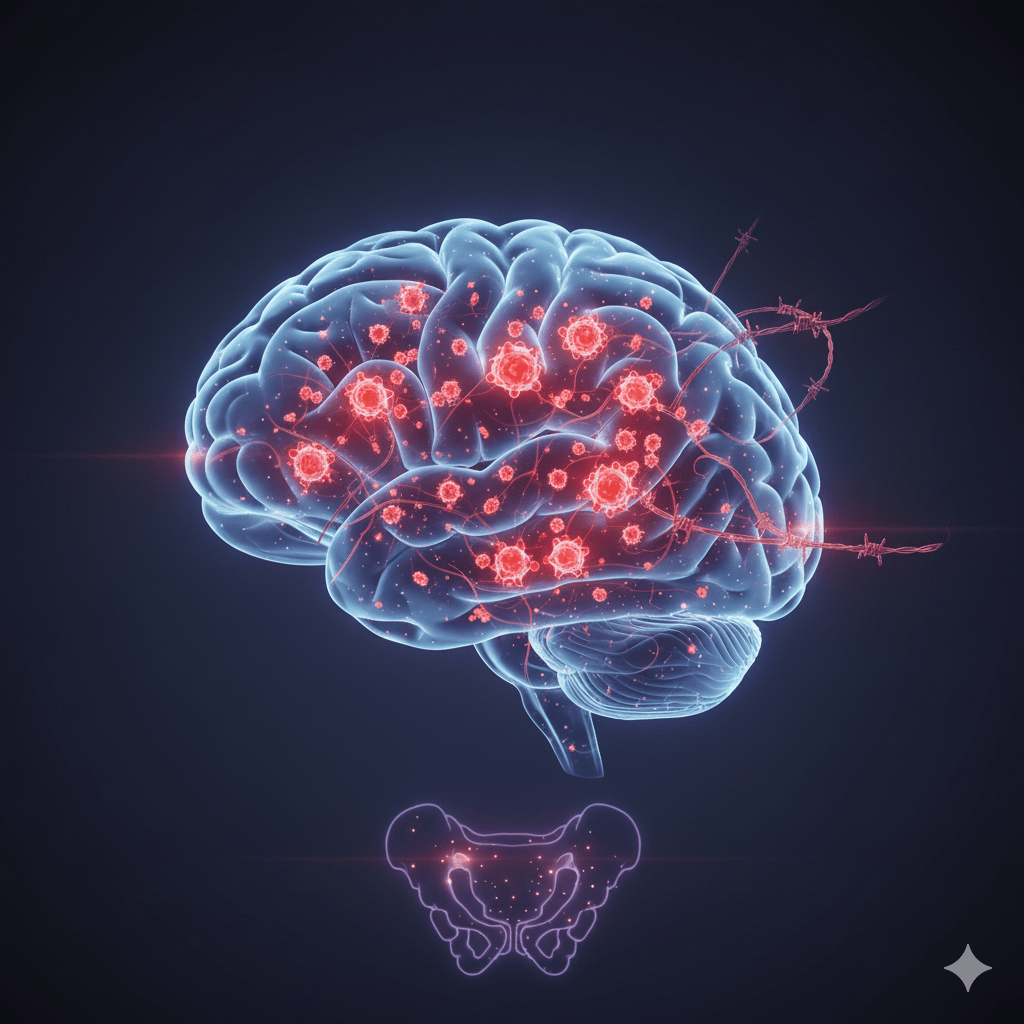
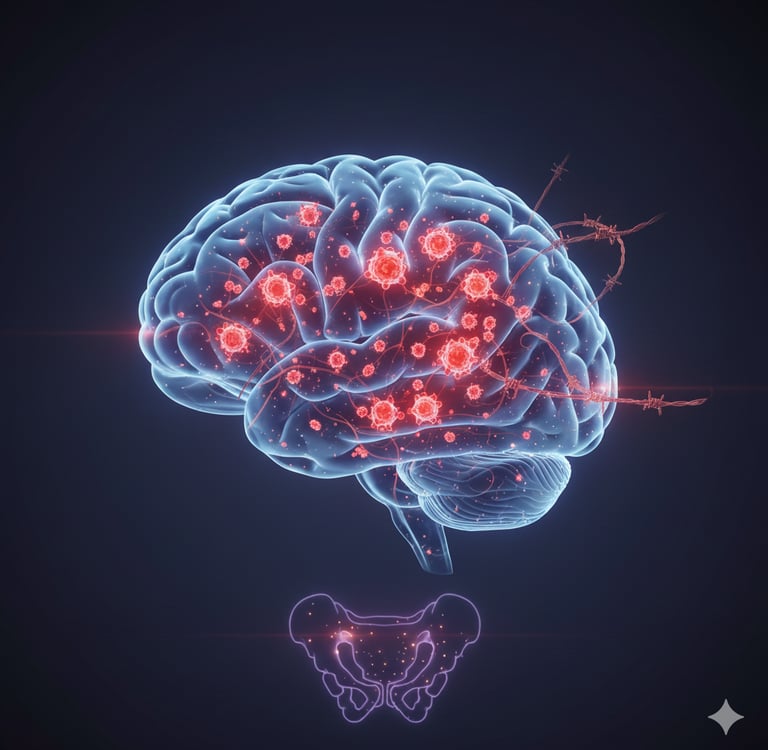
Endometriosis trains the nervous system since chronic pain rewires multiple circuits in the brain at once. What this tells us is that the issue is no longer limited to being just a pelvic problem, but it leads to a central nervous system condition with “sensory, emotional, cognitive and behavioral” factors (Yang et al., 2019). The key driver here is central sensitization. The ongoing inflammation intensifies glutamate signaling through the NMDA receptors. Therefore, calcium flows, synapses change, and the dorsal horn neurons are more excitable. In addition, the signals get amplified, the thresholds drop and what used to be tolerable now hurts (Yang et al., 2019). Endometriosis shows this very clearly. Pain can even persist after lesion removal and often fails to match the lesion load, which points beyond the pelvis and reaches the central mechanisms that keep the pain loud (Bashir et al., 2023).
What role does the brain play in this? The circuits that decide what the body notices, especially the anterior insula and the anterior cingulate, give more weight to the internal pain signals. The emotion and memory systems, including the hippocampus and the amygdala, tie these signals to fear and anticipation (Yang et al., 2019). The result is a dysregulated brain that is more attuned to the pain and begins to anticipate it, amplifying the pain perception during flares. In addition, the glial cells work to sustain this state. The microglia and astrocytes respond to pelvic inflammation and visceral signals by releasing cytokines and shifting their phenotype in ways that amplify nociception (Bashir et al., 2023). In a mouse model of endometriosis, there was widespread glial activation. The microglial soma size increased across the cortex, hippocampus, thalamus, and the hypothalamus and the astrocyte activation increased in the hippocampus. All these regions participate in pain processing, stress responses and anxiety, which links peripheral inflammation to central change fast enough to impact diagnosis and treatment of endometriosis (Bashir et al., 2023).
Similar patterns of dysregulation occur with mood, depression, and sleep. Among patients with chronic pain, anxiety and depression are the most common symptoms (Yang et al., 2019). Taken together, sustained pain and prolonged dismissal shift the set point of the nervous system. When the ascending pain signals go through the CNS, networks like the insula, anterior cingulate and amygdala start to assign more significance to internal body signals. Simultaneously, the effectiveness of descending control from the prefrontal cortex and the cingulate regions is reduced, which leads to a more heightened assimilation of pain and stress (Sherwani et al., 2024). Thus, the result is a more distressing, persistent, and easily triggered pain, a shift that now shapes daily life.
Stress, pain, avoidance, and self-doubt are factors that create a vicious cycle where they feed off each other and sustain symptoms. Pain repeatedly switches the stress response on, which does nothing but add to the cumulative burden of chronic pain, further wearing down the regulation systems. Prolonged and unpredictable stress prepares the systems as well, lowering pain activation threshold. In both ways, stress and pain circle and drive off each other and greatly impact daily function (Aboushaar & Serrano, 2024). Once pain pathways are sensitized, the body is placed under the spotlight. Poor sleep increases reactivity and expecting pain increases it. By morning, small signals feel even larger, and pain lasts longer.
Avoidance builds on this. When avoidance becomes routine and takes hold, everyday tasks easily slip, thresholds drop, and the next flare would only need a small trigger (Aboushaar & Serrano, 2024). Stress shows up even at home and between partners where pain during sex or even routine tasks leads to emotional withdrawal and impacts the social life of endometriosis patients (Long et al., 2016).
What tightens the loop the most is medical dismissal. When symptoms are minimized, self-doubt is common. Care is delayed, stress levels rise, and attention locks to internal signals. Over long periods of time, this causes a great strain in quality of life and rates of anxiety and depression in endometriosis patients, even when they are not in an active flare. Stress exposure in an animal model made endometriosis worse, which means the cycle can also start from stress not only pain (Cuevas et al., 2012). This makes it harder to break the cycle without both reducing stress as well as better pain treatment strategies. An endometriosis patient who wakes up from poor, stressful sleep is not far away from postponing her tasks. She spends the day with a heating pad, recalling "it's just stress" from her doctor's appointment, and by evening she already expects the same routine the next day. This is not oversensitivity. It is the outcome of repeated pain and stress when they dysregulate the nervous system, completely causing neurobiological exhaustion. So, waiting it out or relaxing won’t help with such a disease.
Critics might say mood and anxiety come first. Sometimes they do. Sometimes pain does. However, in endometriosis, this debate misses the point. There is strong evidence for a biological loop of stress, pain, and inflammation that feed into each other. Existing stress can increase the severity of endometriosis in animal models while continuous pain keeps the stress switch activated. Endometriosis patients do also suffer clinically from high rates of anxiety and depression and lower life quality. Therefore, this isn't a personality issue but rather the biology of a bidirectional system and it serves as a reminder that proper care involves both treating the disease and providing strong psychological support. The facts are clear, and endometriosis patients should no longer pay the price of the research gap.
The trend of delayed and altered diagnosis needs to be reversed in order to break the cycle of dismissing women and the pain they have been expected to tolerate. Calling severe pelvic pain "normal" undermines the truth of endometriosis and pushes it underground, disrupting the body’s systems, physiologically and psychologically. Real steps need to be taken. Patients need to be believed, not ignored. Diagnosis and treatment should move faster. Reassurance is not enough alone; a strong support system needs to be available for patients to be able to go through the long and complicated road of endometriosis. It is crucial to teach menstrual health early and build awareness in clinics. It’s beyond important to realize that endometriosis is often a long-term condition that greatly impacts “physical, sexual, psychological and social” well-being and that many women might need ongoing, encompassing support (NICE, 2014). Funding research that understands the woman's body and allowing insurance to cover the care required by endometriosis are critical steps. If we just start with shortening diagnosis delay and spreading awareness, that will make a huge difference. If these practices become more normal, fewer people have to live in suffering quietly for years.
Endometriosis should not be a test of endurance… It’s a call for both society and medicine to do better. A shift should be made in the focus of proper care from proving to treating. When that becomes the starting point, the rest follows.
Download the full document
references
Aboushaar, N., & Serrano, N. (2024). The mutually reinforcing dynamics between pain and stress: mechanisms, impacts and management strategies. Frontiers in Pain Research, 5(5). https://doi.org/10.3389/fpain.2024.1445280
Cuevas, M., Flores, I., Thompson, K. J., Ramos-Ortolaza, D. L., Torres-Reveron, A., & Appleyard, C. B. (2012). Stress Exacerbates Endometriosis Manifestations and Inflammatory Parameters in an Animal Model. Reproductive Sciences, 19(8), 851–862. https://doi.org/10.1177/1933719112438443
Davenport, S., Smith, D., & Green, D. J. (2023). Barriers to a Timely Diagnosis of Endometriosis: A Qualitative Systematic Review. Obstetrics and Gynecology, 142(3). https://doi.org/10.1097/AOG.0000000000005255
Hudson, N. (2022). The Missed disease? Endometriosis as an Example of “undone Science.” Reproductive Biomedicine & Society Online, 14(14), 20–27. https://doi.org/10.1016/j.rbms.2021.07.003
Li, W., Feng, H., & Ye, Q. (2025). Factors contributing to the delayed diagnosis of endometriosis—a systematic review and meta-analysis. Frontiers in Medicine, 12. https://doi.org/10.3389/fmed.2025.1576490
Living with Endometriosis: A Patient’s Perspective. (2023, February 25). Consultant360. https://www.consultant360.com/podcasts/living-endometriosis-patients-perspective
Long, Q., Liu, X., Qu, Q., & Guo, S.-W. (2016, November 21). Chronic stress accelerates the development of endometriosis in mouse through adrenergic receptor β2. Academic.oup.com. https://academic.oup.com/humrep/article/31/11/2506/2274334
Moradi, M., Parker, M., Sneddon, A., Lopez, V., & Ellwood, D. (2014). Impact of endometriosis on women’s lives: a qualitative study. BMC Women’s Health, 14(1). https://doi.org/10.1186/1472-6874-14-123
NICE. (2017, September 6). Overview | Endometriosis: diagnosis and management | Guidance | NICE. Nice.org.uk; NICE. https://www.nice.org.uk/guidance/ng73
Shah Tauseef Bashir, Redden, C. R., Raj, K., Arcanjo, R. B., Stasiak, S., Li, Q., Steelman, A. J., & Nowak, R. A. (2023). Endometriosis Leads to Central Nervous system-wide Glial Activation in a Mouse Model of Endometriosis. Journal of Neuroinflammation, 20(1). https://doi.org/10.1186/s12974-023-02713-0
Wanström, S. (2025, July 9). It’s not normal to be in pain. The Polyphony. https://thepolyphony.org/2025/07/09/not-normal-in-pain/
Yang, S., & Chang, M. C. (2019). Chronic Pain: Structural and Functional Changes in Brain Structures and Associated Negative Affective States. International Journal of Molecular Sciences, 20(13), 3130. https://doi.org/10.3390/ijms20133130