Strategizing from 7 cities across the globe

How Are We Fighting the Global Shortage of Organs for Donation?
Aya w. kanaan
Introduction:
An organ transplantation is a surgical procedure where a healthy organ is transferred from a donor to a patient whose organ is damaged or failing. This operation is a lifeline for individuals with chronic diseases and the aging population. Due to the complications tied to transplantations and the low donation rates, the global demand for organs currently exceeds the supply. This shortage is causing the loss of many lives, and efficient solutions must be implemented as soon as possible.
Download the full document
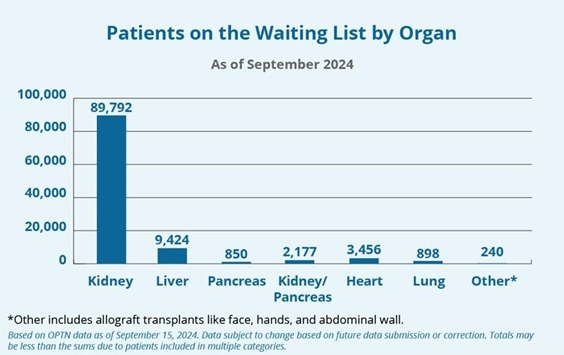
There are currently over 103,000 people on the national transplant waiting list.
Different Types of Organ Donation:
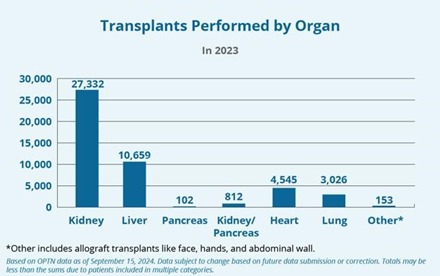
What are the various types of organ donations?
There are four different types of organ donation, and they consist of pediatric donation, living donation, deceased donation, and tissue donation. (2)
Living donation occurs when a living person donates their organs to another person. An organ from a living donor typically lasts 10 to 15 years. Although living organ donation provides an additional source of organs, it comes with its own set of issues and limitations (3).
Deceased organ donation, also known as cadaveric organ donation, is the surgical removal of organs from recently deceased individuals with the consent of the deceased or their kin for transplantation into patients with organ failure or life-threatening medical conditions. Deceased organ donation is crucial for addressing the global shortage of transplantable organs and saving countless people's lives. (4)
The process of donating various tissues from a deceased or living donor for medical use in transplantation, research, or medical treatments is known as tissue donation. Tissue donation plays a critical role in medicine because it provides rich resources for a wide range of medicinal and research uses. (5)
The act of donating organs or tissues from a deceased child to preserve or improve the lives of other children in need of organ transplants is referred to as pediatric organ donation. The choice to donate a child's organs is made by his or her parents or legal guardians. Healthcare professionals involved in the child's care will discuss the donation options with the family and provide the information needed to help them make an informed and well-rounded decision. (6)
Issues With Organ Transplantation:
There are several complications tied to organ transplantation that result in the shortage of organs such as the ethics of the procedure, the varying laws in different countries, the illegal trade, and the preservation and procurement of organs.
Organ transplantation is plagued with legal and ethical quandaries. In terms of legal procedures, countries have different laws and rules surrounding organ procurement, allocation, and transplantation. Moreover, consent, equitable distribution, and the prevention of organ trafficking all provide ethical predicaments. Because of the arduous organ transplantation process and the ethical questions surrounding it, many prefer not to get involved, resulting in a decrease in organ donation rates.
Furthermore, the illegal organ trade, such as organ trafficking and transplant tourism, exacerbates the organ shortage. Organ trafficking encompasses the exploitation of vulnerable individuals, coercion, and the selling of organs, all of which violate ethical norms and jeopardize recipients' safety. For example, in 2017, a growing number of organ trafficking cases were uncovered in Lebanon, as refugees were desperately trying to support themselves and their families. In these situations, the donor is frequently left with a lifetime of compromised health and debt from medical bills because of the treatment. In turn, the recipient may also be afflicted with illness, necessitating the use of expensive immunosuppressive medicines because of poor donor matching. (7)
Additionally, the logistics of organ transplantation present various difficulties. Outside the body, organs have limited viability, necessitating meticulous preservation and timely transportation. The current standard strategy for organ preservation is static cold storage (SCS). However, because extended cold storage of organs increases the risk of early graft malfunction, the period available for SCS preservation is limited. Efficient organ procurement and allocation mechanisms are fundamental in alleviating the shortage.
Solutions for the Global Shortage:
Scientific research has concentrated on improving donor identification, evaluation, and management to increase the number of organs available for the transplant procedure. Improved screening and diagnostic tools, such as sophisticated imaging modalities and biomarker analyses, have assisted in identifying more potential donors and increasing the pool of transplantable organs. Machine perfusion and other innovations in organ preservation procedures can improve organ quality and increase the number of viable organs.
In addition, xenotransplantation involves the transfer of biological material between different species. The most common form of xenotransplantation involves transplanting animal tissues or organs into humans. Xenotransplantation is a broad term that includes many different treatment methods. For kidney transplants, the general concept is simple – transfer a working kidney from an animal into a person. Compared to other animals, pigs are ideal for organ harvesting as they rapidly grow to human size in a few months. Using animals’ organs can shorten the long waitlist for organs. (8)
Moreover, the laboratory is not the only place where scientists are working to fight organ scarcity. Public awareness campaigns and educational programs have been indispensable and play a vital role in encouraging organ donation and debunking myths about transplantation. Understanding the cultural, ethical, and religious aspects of organ donation has influenced policy decisions and raised donation rates in some areas. (9).
Tissue engineering and regenerative medicine, which have shown significant promise in addressing organ scarcity, are another effective approach. Researchers have investigated numerous technologies, such as 3D bioprinting and cellular reprogramming, to build functioning organ-like structures from xenogeneic or patient-derived cells. They have the potential to revolutionize organ transplantation by lowering the reliance on traditional donors and decreasing the chance of organ rejection. Traditional materials technology has resulted in significant advancements in regenerative medicine. Tissue-engineered products based on innovative biodegradable polymeric systems will significantly improve health care and hold promise for our future. (10)
Conclusion:
This major organ shortage crisis is resulting in the death of patients on the waitlist and hindering many from living a healthy life. Addressing the global organ shortage requires a multifaceted approach involving public awareness campaigns, policy reforms, ethical considerations, and international collaboration. Although the issue hasn’t been resolved, efforts are being directed toward increasing organ donation rates, preventing organ trafficking, optimizing organ allocation systems, and exploring alternative solutions to traditional organ transplantation.
References:
1. GM; A. (n.d.). Organ shortage crisis: Problems and possible solutions. Transplantation proceedings. Available at: https://pubmed.ncbi.nlm.nih.gov/18261540/
2. The 4 types of organ, eye, and tissue donation (no date). Available at: https://www.midamericatransplant.org/news/4-types-organ-eye-and-tissue-donation.
3. The Big Ask, The Big Give (no date). Available at: https://www.kidney.org/transplantation/livingdonors/general-information-living-donation.
4. Deceased organ and tissue donation for transplants (no date). Available at: https://www.hta.gov.uk/guidance-public/body-organ-and-tissue-donation/deceased-organ-and-tissue-donation-transplants#:~:text=Deceased%20organ%20and%20tissue%20donation%20for%20transplantation%20means%20donating%20your,lung%2C%20pancreas%20and%20small%20bowel.
5. Deceased organ and tissue donation for transplants (no date b). Available at: https://www.hta.gov.uk/guidance-public/body-organ-and-tissue-donation/deceased-organ-and-tissue-donation-transplants#:~:text=Deceased%20organ%20and%20tissue%20donation%20for%20transplantation%20means%20donating%20your,lung%2C%20pancreas%20and%20small%20bowel.
6. Paediatric care (no date). Available at: https://www.odt.nhs.uk/deceased-donation/best-practice-guidance/paediatric-care/.
7. Cusack, J. (2020) “Why Illegal Trafficking in Organs is growing fast..but few are talking about it..by Steve Farrer,” Financial Crime News [Preprint]. Available at: https://thefinancialcrimenews.com/why-illegal-trafficking-in-organs-is-growing-fastbut-few-are-talking-about-itby-steve-farrer/#:~:text=The%20outcomes%20for%20the%20donor,due%20to%20poor%20donor%20matching.
8. Xenotransplantation (2023b). Available at: https://www.kidney.org/atoz/content/xenotransplantation.
9. Organ donation law change awareness campaign launches (no date). Available at: https://www.organdonation.nhs.uk/get-involved/news/organ-donation-law-change-awareness-campaign-launches/#:~:text=The%20campaign%2C%20%27Pass%20it%20on,not%20you%20want%20to%20donate.
10. Tissue engineering and regenerative medicine (no date). Available at: https://www.nibib.nih.gov/science-education/science-topics/tissue-engineering-and-regenerative-medicine.
11. U.S. Department of Health & Human Services. (n.d.). Organ donation statistics. OrganDonor.gov. Available at: https://www.organdonor.gov/learn/organ-donation-statistics